The Noises That Mean Something in a Carson City Garage
Carson City homes run mostly 1960s-70s hardware in a cold-severe climate. Here's what each garage door noise actually tells you before it fails outright.
Carson City sits in a cold-severe climate band, and that matters more to a garage door than most owners think. Steel contracts in cold air. Grease thickens. A torsion spring that turned quietly in August can start grinding by December, not because anything broke, but because the metal itself tightened up and the lubricant stopped doing its job. If your door has been fine for months and suddenly starts groaning on the first cold mornings, that's not coincidence - that's the climate band doing exactly what it does here every year. The opposite happens in spring: ice inside track channels melts, hardware that seized loosens again, and a door that was silent in February starts rattling in April as parts resettle. If you own a house here long enough, you learn to expect two noisy stretches a year and treat the quiet months as the ones to actually look at the hardware, not just listen to it.
The Situation
Housing in this service area was built mostly between 1938 and 2003, with the median home dating to 1976, and most of the stock across the fourteen communities we cover - from Virginia City to Georgetown - clusters in the 1960s and 70s. That means a lot of garages still carry original torsion springs, steel rollers instead of nylon, and lift cables sized to doors that were lighter before anyone added insulation or a heavier opener motor. A 1976 door isn't failing because it's old in some vague sense - it's failing because the specific parts on it were never designed to run this many cycles for this many decades in a cold-severe climate. The noise you hear now is usually that hardware finally catching up to its age, not a sign of bad luck.
What Local Conditions Do
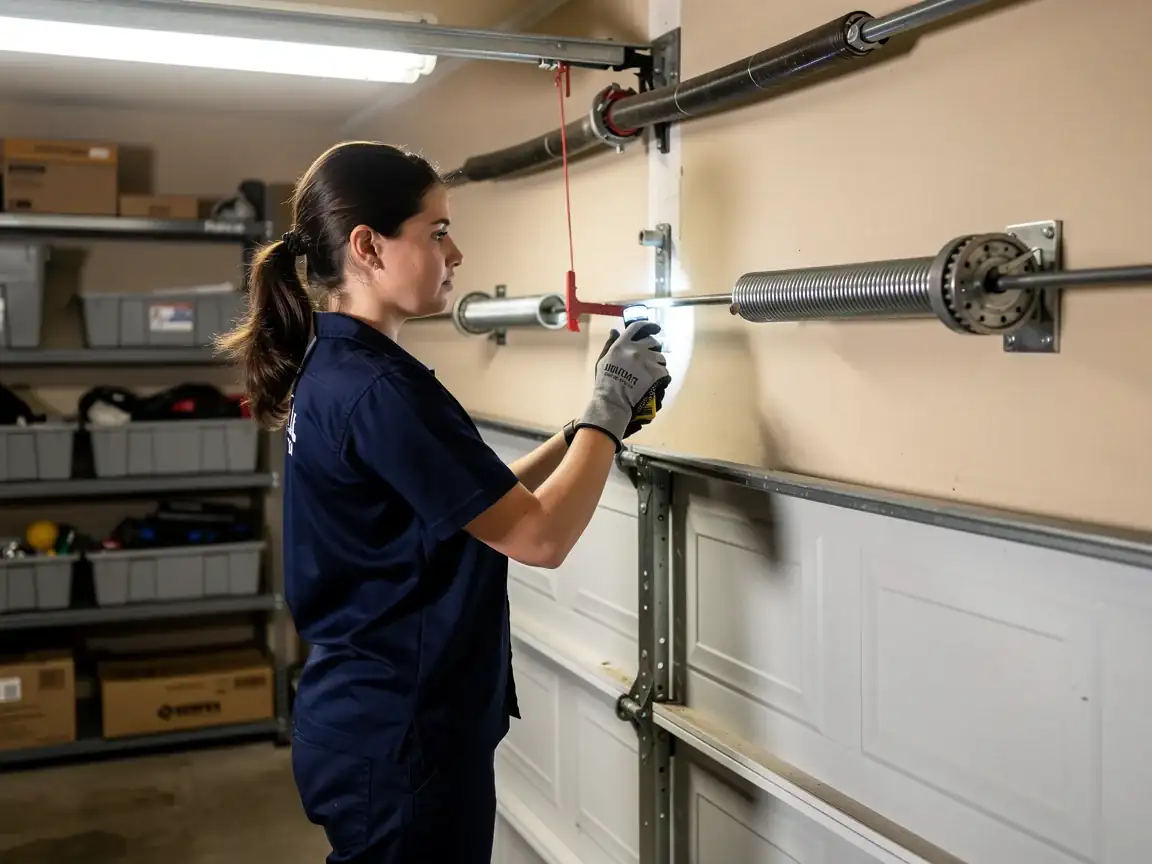
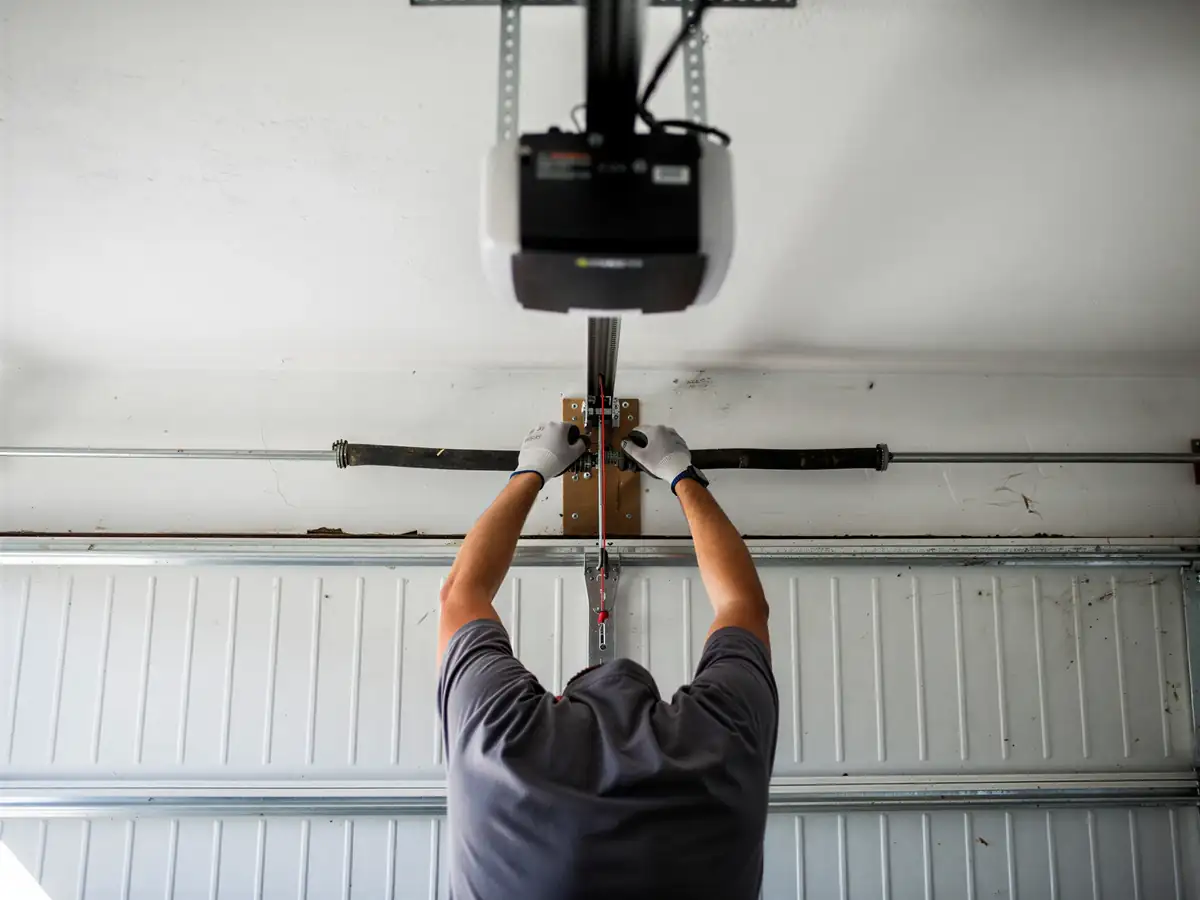
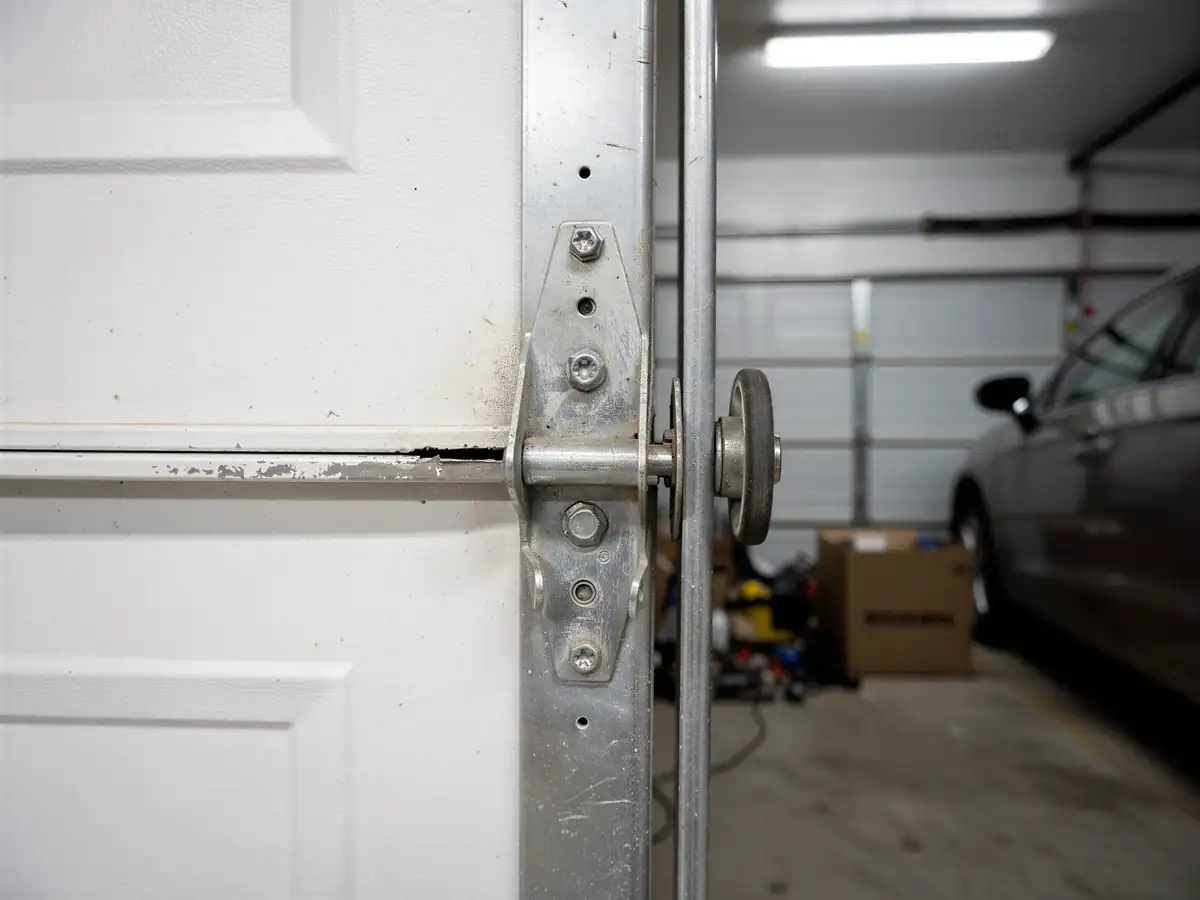
Cold-severe conditions are hard on exactly three things: springs, bearings, and cable ends. Springs lose a little tension every winter as the metal cycles through cold contraction and warm expansion, so a squeal that gets lower in pitch over a season, not louder, usually means the spring is winding down, not just dry. Bearings in 1960s and 70s steel rollers were never sealed the way newer nylon rollers are, so grit and cold grease turn a smooth roll into a rhythmic thump, once per rotation, that gets worse the colder it gets. Cable ends fray at the drum where cold makes the wire stiffer and less forgiving on each wrap - that's the faint clicking or popping some owners notice only in the morning before the door has warmed up from use. None of these are random. Each one tracks to a part that's been running the same cold cycle for forty-plus years in this exact climate.
Where People Go Wrong
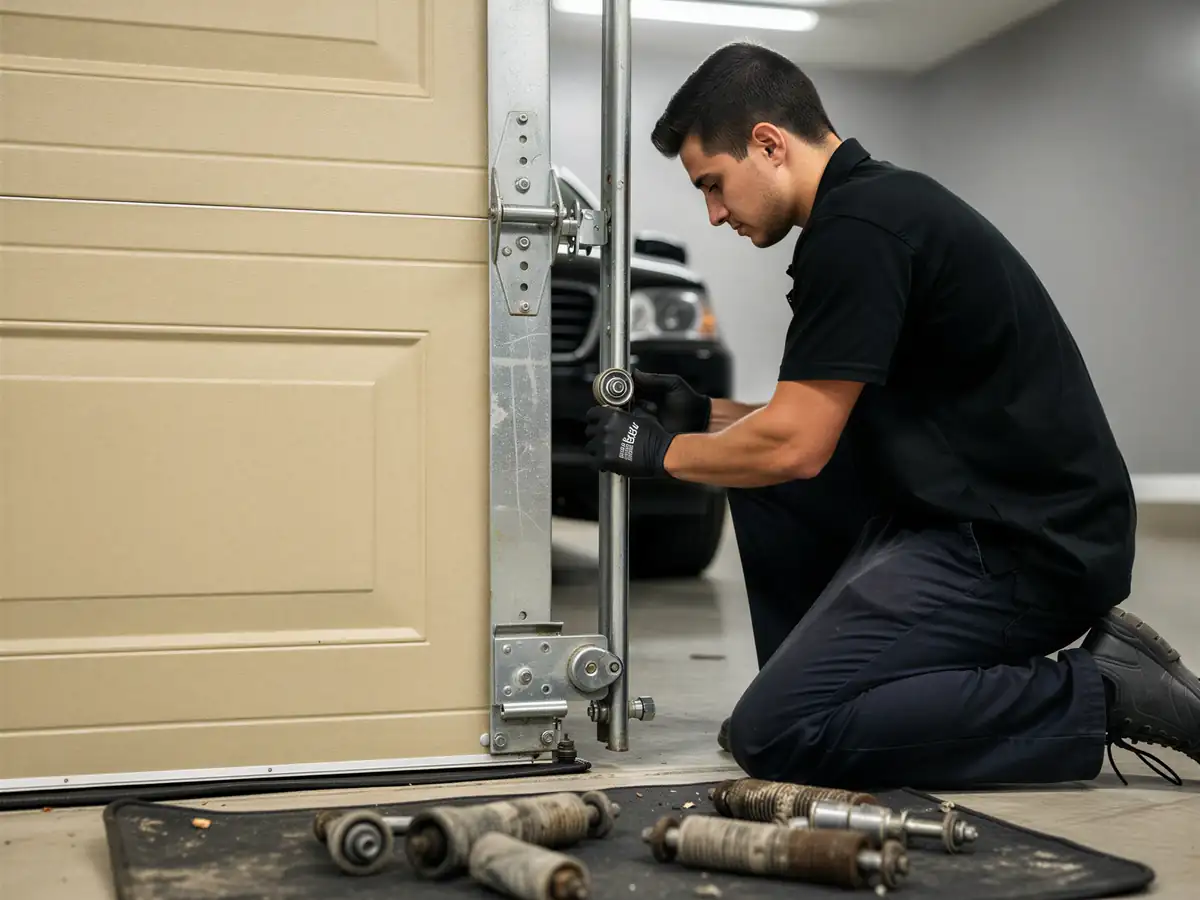
The most common mistake is spraying lubricant on a spring and calling the noise fixed. It quiets things down for a week, sometimes a month, and then the sound comes back worse because the underlying wear - tension loss, bearing grit, a fraying cable strand - was never addressed, just muffled. The other mistake is waiting for a noise to turn into a failure before calling anyone, which with a 1976-era door usually means the spring lets go on a day it's under full load, not a convenient one. We'll say plainly: not every noise means replace the door. A lot of what you hear on original 1960s and 70s hardware is fixable with the right spring or roller swap, and we won't push a full replacement on a door that's got good years left in it. But we also won't tell you a cable popping on a cold morning is nothing - on hardware this old, in this climate, it almost never is.
Why does my garage door only make noise in winter?
Cold-severe conditions tighten metal and thicken old grease, so springs, bearings, and cables that run fine in warm months start binding or grinding once temperatures drop. If your home dates to the 1960s or 70s, which is typical for this area, that original hardware has been through this cycle for decades and the wear shows up loudest in cold weather.
Is a grinding noise always the spring?
Not always. A rhythmic thump once per rotation is more often a worn roller bearing, common on steel rollers from the 1960s-70s housing stock here. A steady grind or squeal that gets lower in pitch over weeks is more likely spring tension loss. Both are worth having looked at before one leads to the other failing.
Should I replace an old door instead of fixing the noise?
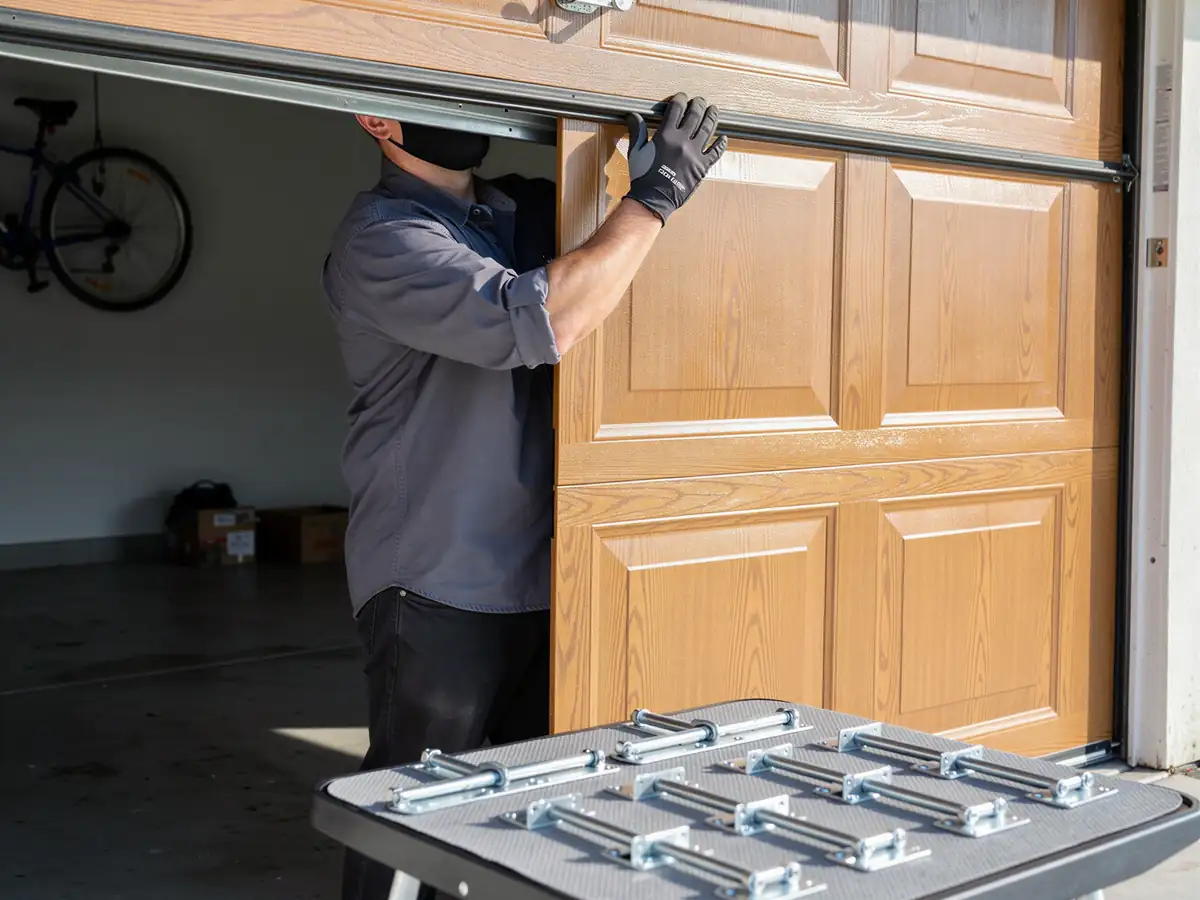
Not automatically. A lot of noise on a 1976-era door comes from a single worn part - a spring, a roller, a cable end - that's replaceable without touching the door itself. Replacement makes more sense when the panel or track is damaged, not just when the hardware is old and noisy.
Ready to get your garage door sorted?
Tell us what it’s doing and where you are in Carson City - we’ll take it from there.