The Situation
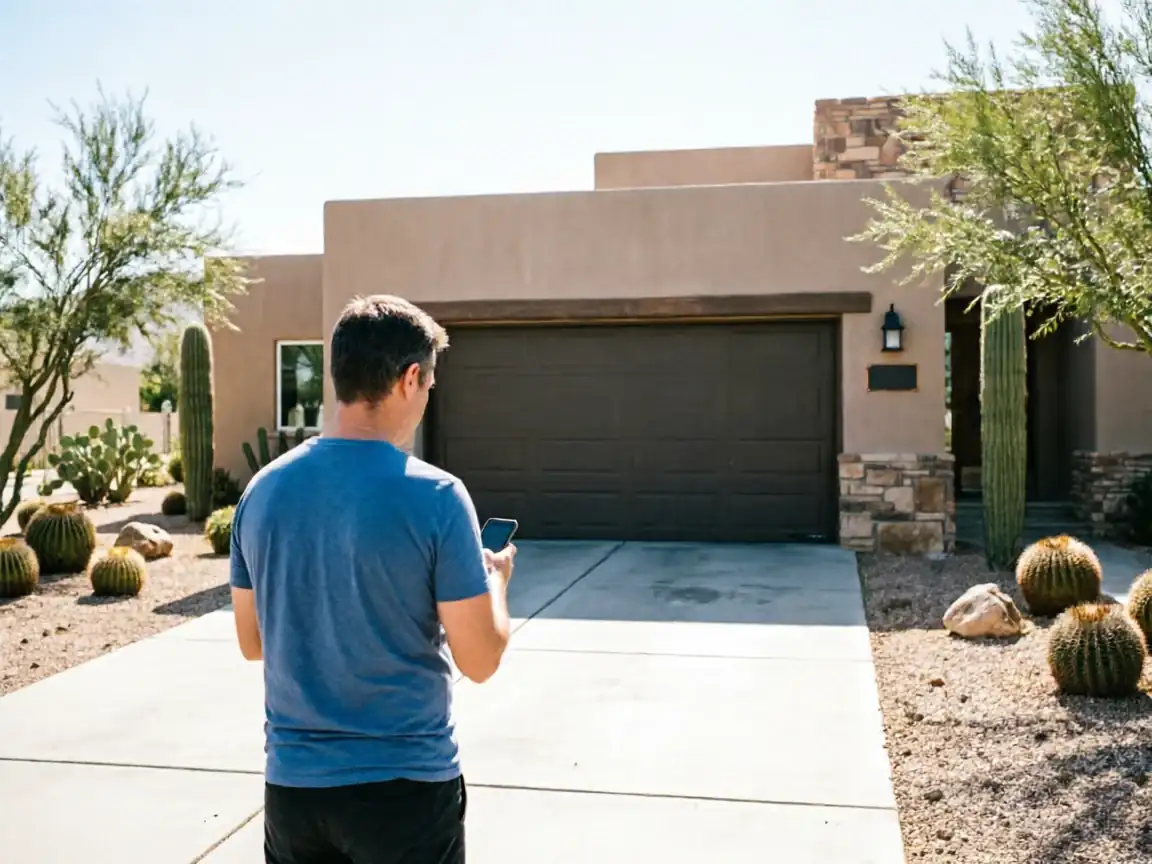
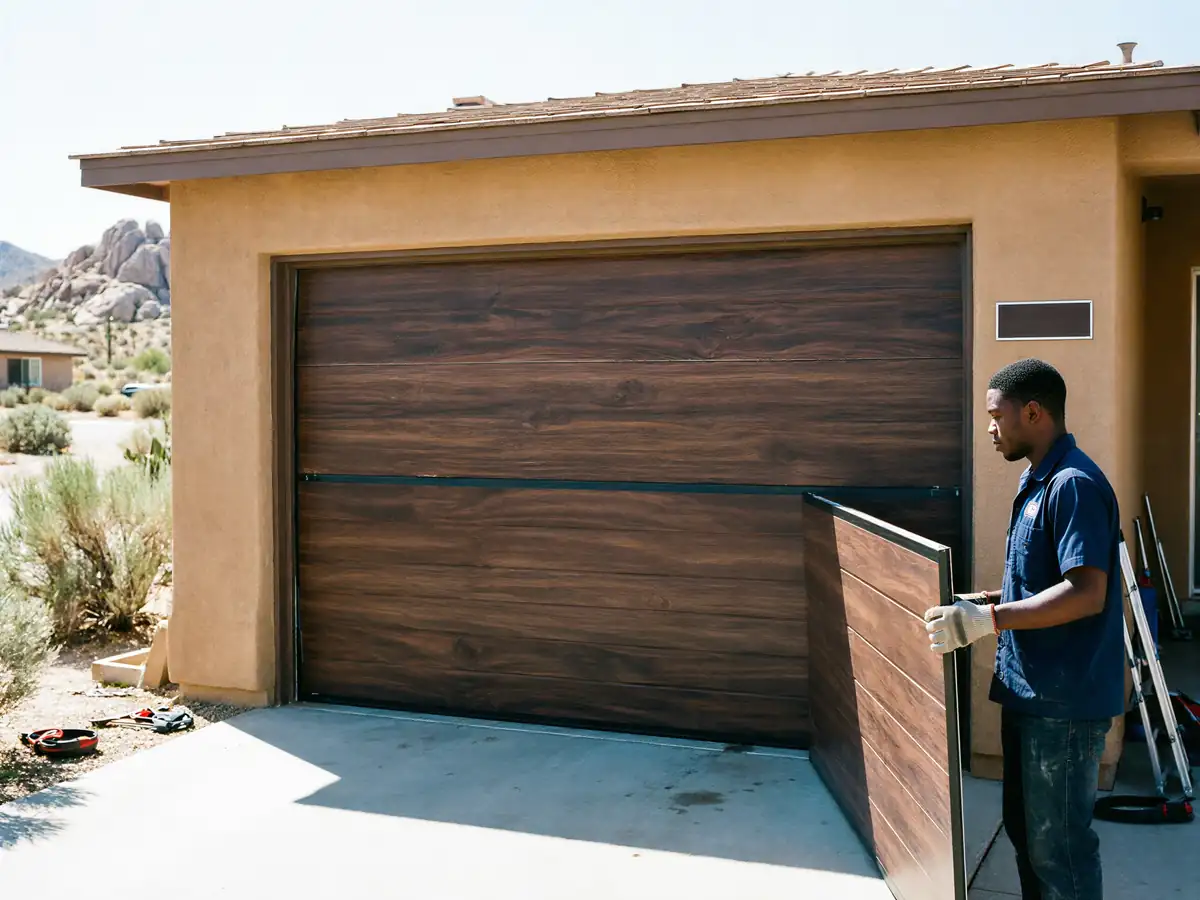
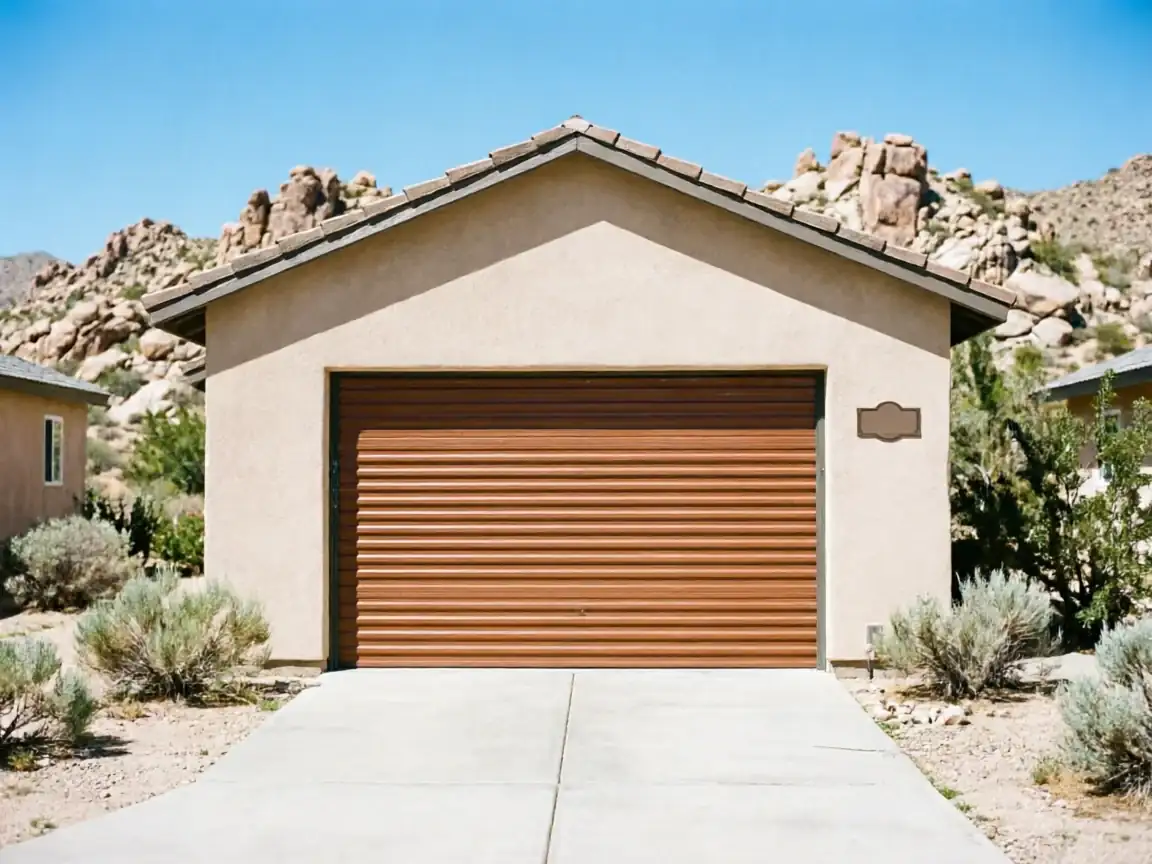
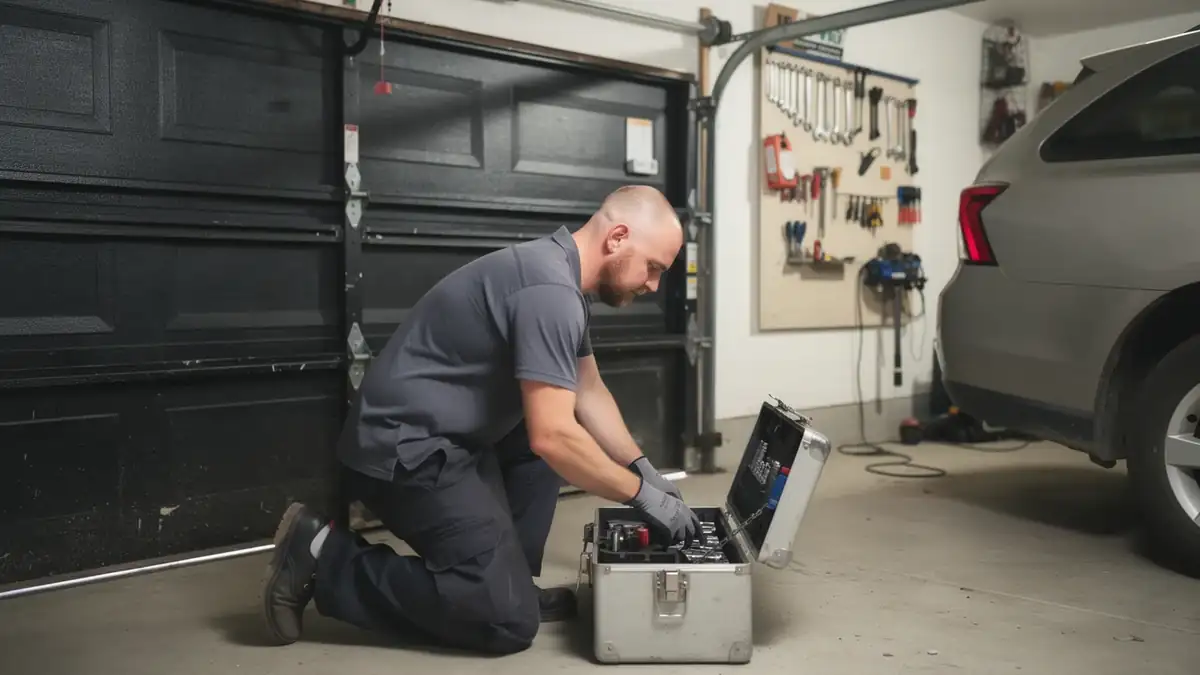
Housing in this service area was mostly built between 1938 and 2003, with the heaviest concentration going up in the 1960s and '70s across the fourteen named neighborhoods we cover. That matters for a service call because it tells us what we're likely to find before we open the panel. A house from that era usually has a door and track system installed at the time of construction or replaced once since, which means original hardware, outdated spring mounts, or a mismatched opener bolted on later by a previous owner. Across the roughly 21,860 households in the area, about 16,650 are owner-occupied houses - the housing type where this kind of repair actually happens, as opposed to rentals where a property manager handles it differently. Median household income here runs $96,019, which is relevant because it usually means a homeowner can choose full replacement over a patch job when a door is genuinely done, rather than being forced into a short-term fix that fails again in a year. A service call here isn't guesswork - it's checking a door against a known age range and a known climate.
What Local Conditions Do
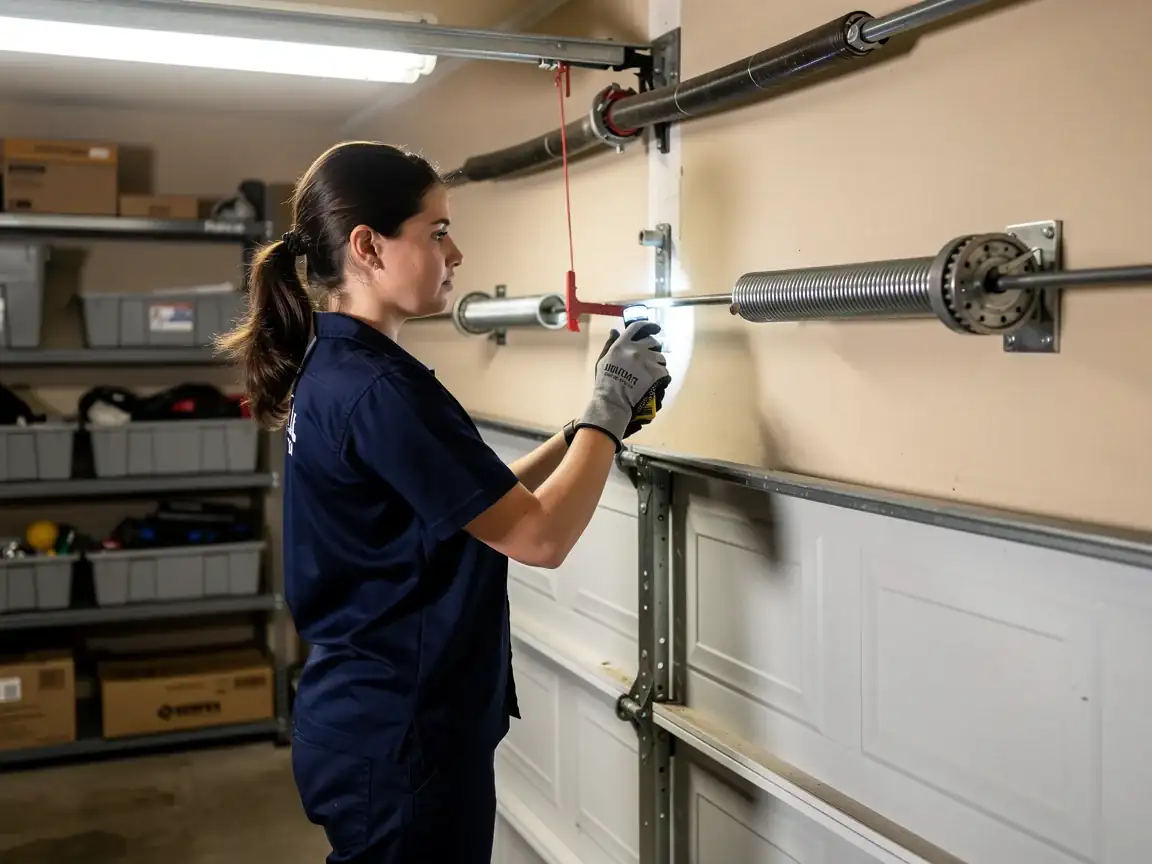
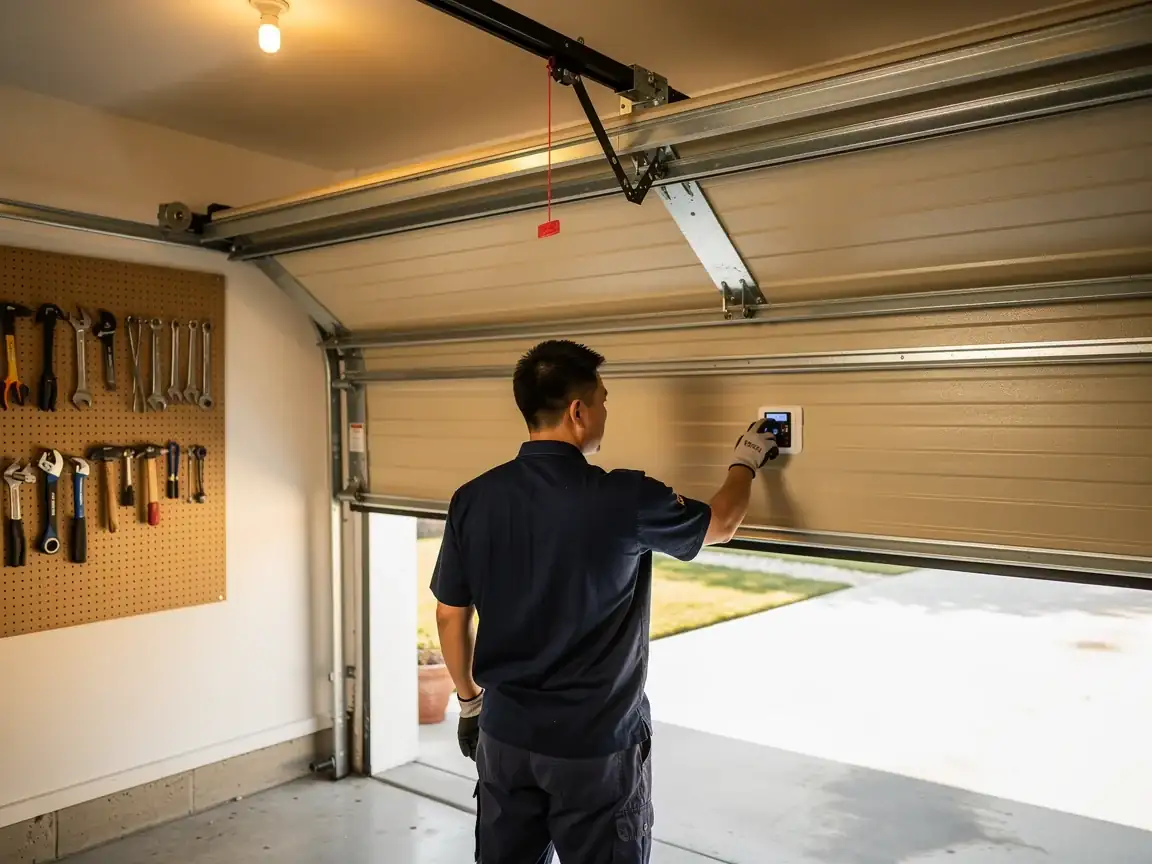
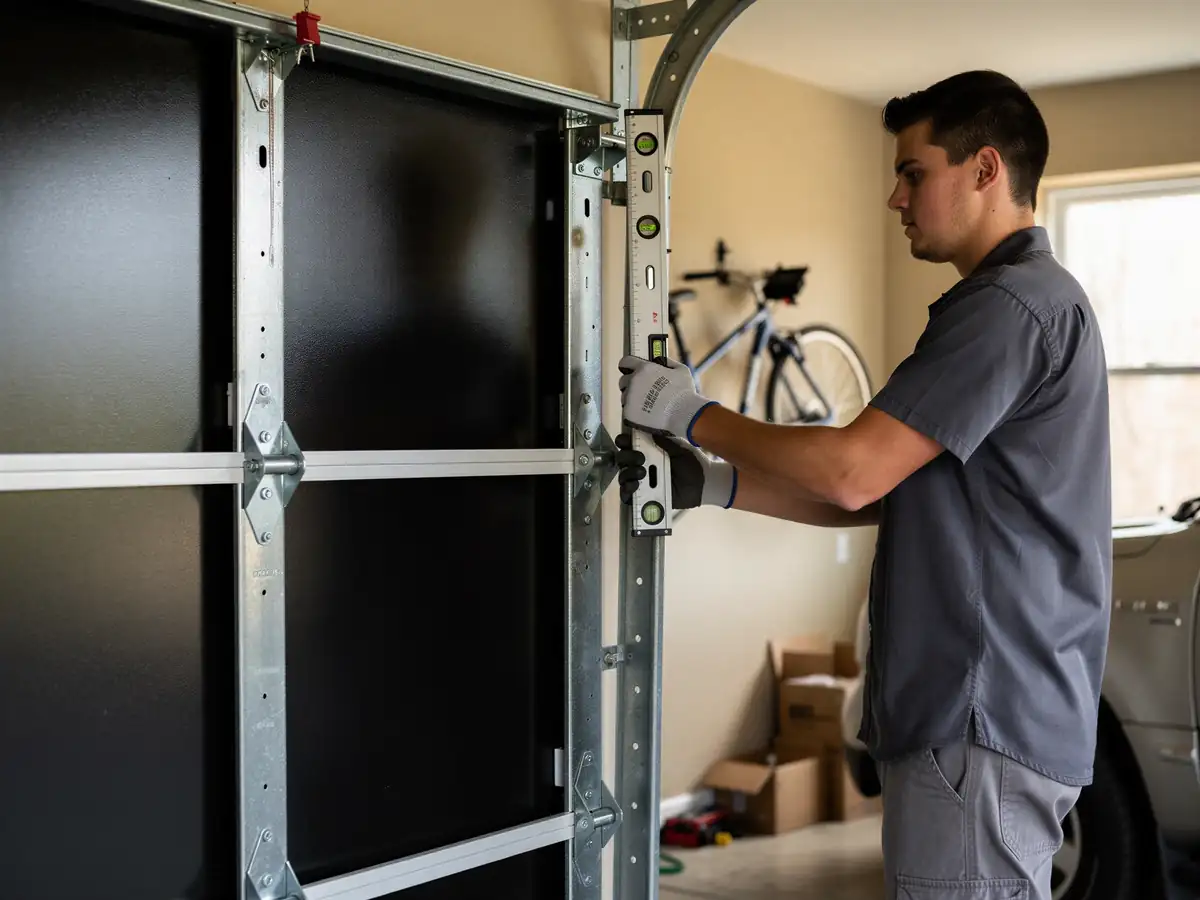
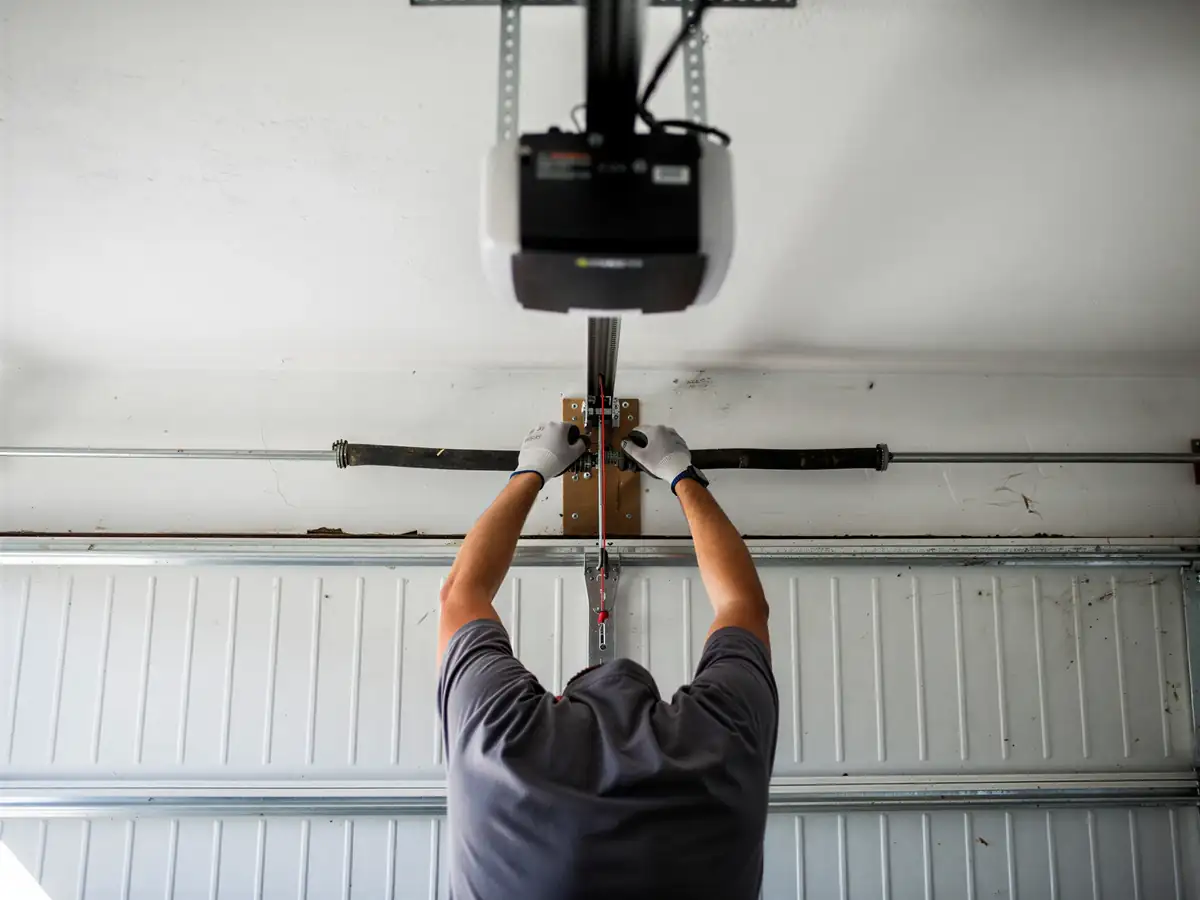
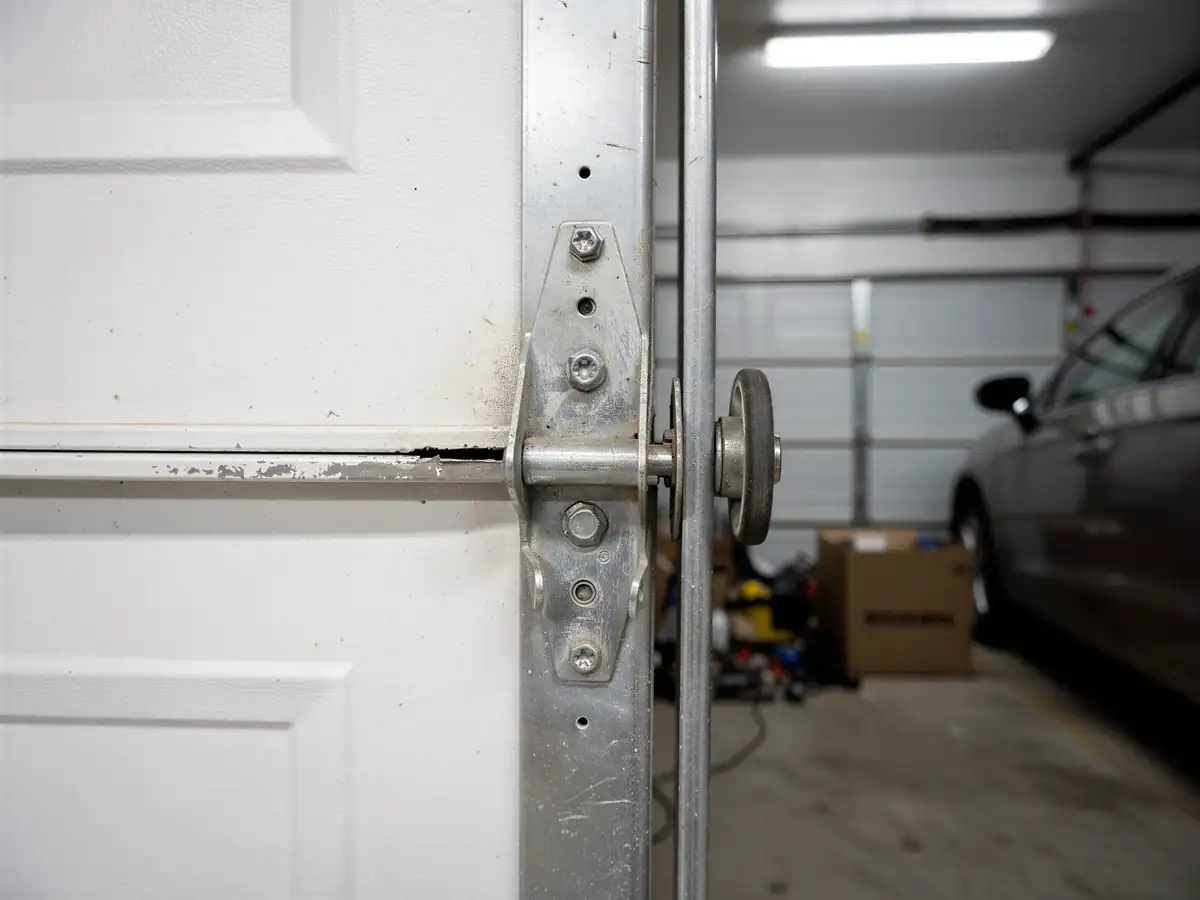
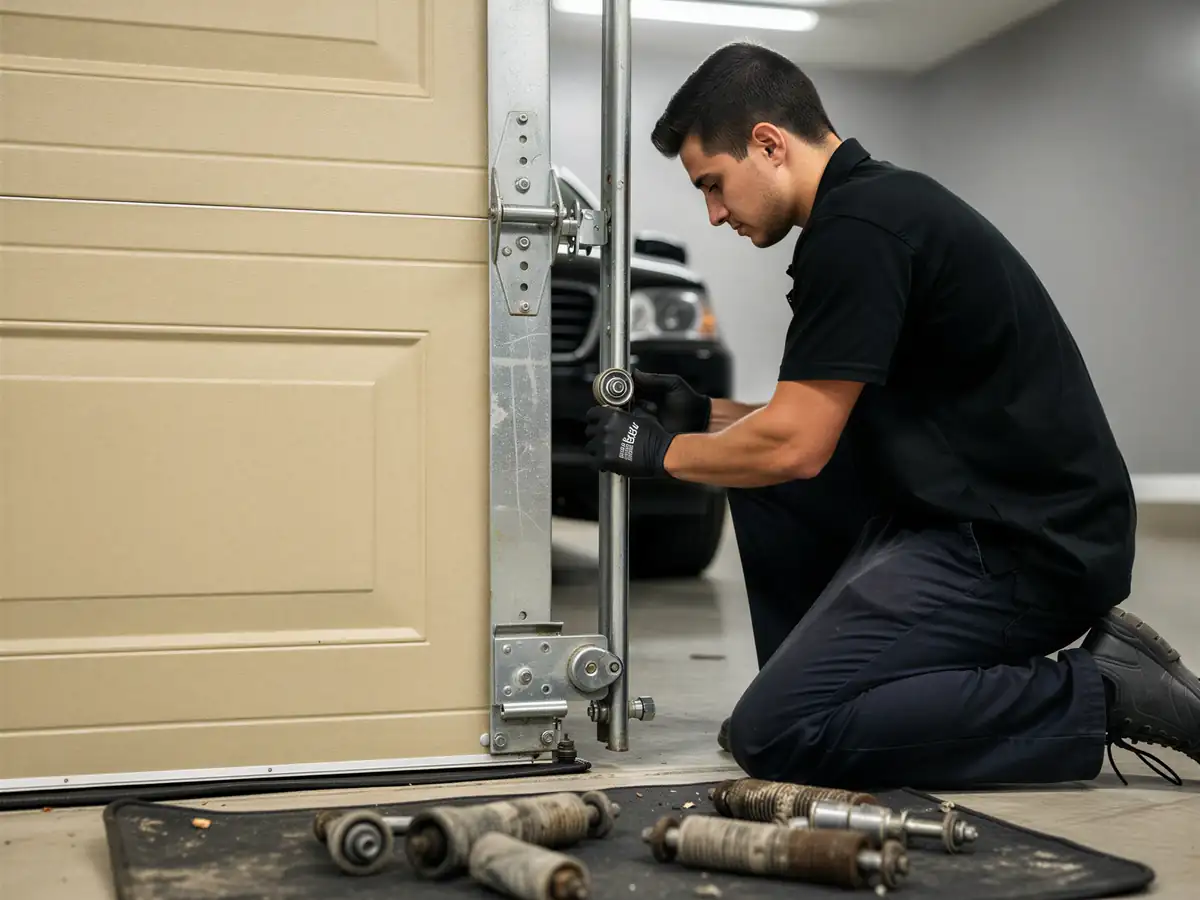
Cold-severe conditions and a housing stock averaging close to fifty years old create a specific, repeatable failure pattern, and a real service call checks for it in order. First, the spring: cold steel is less forgiving under repeated flex, so a torsion spring near the end of its cycle life tends to let go in winter, not summer. Second, the track: original installs from the 1960s and '70s often used lighter-gauge rail than what's standard now, and years of thermal expansion and contraction can leave it slightly out of plumb, which shows up as a door that rattles or walks sideways on the way down. Third, the opener: older units weren't built for the duty cycle of a modern remote and keypad combination, and cold mornings are exactly when the motor draws the most current to force a stiff door open. We check all three on every call, because fixing the symptom you called about - say, a noisy door - without checking the other two usually means a second call within a season. That's not us trying to sell more work; it's just where the failures actually cluster given this climate and this housing age.