What Can Go Wrong
A garage door panel fails a few different ways, and they don't all call for the same fix
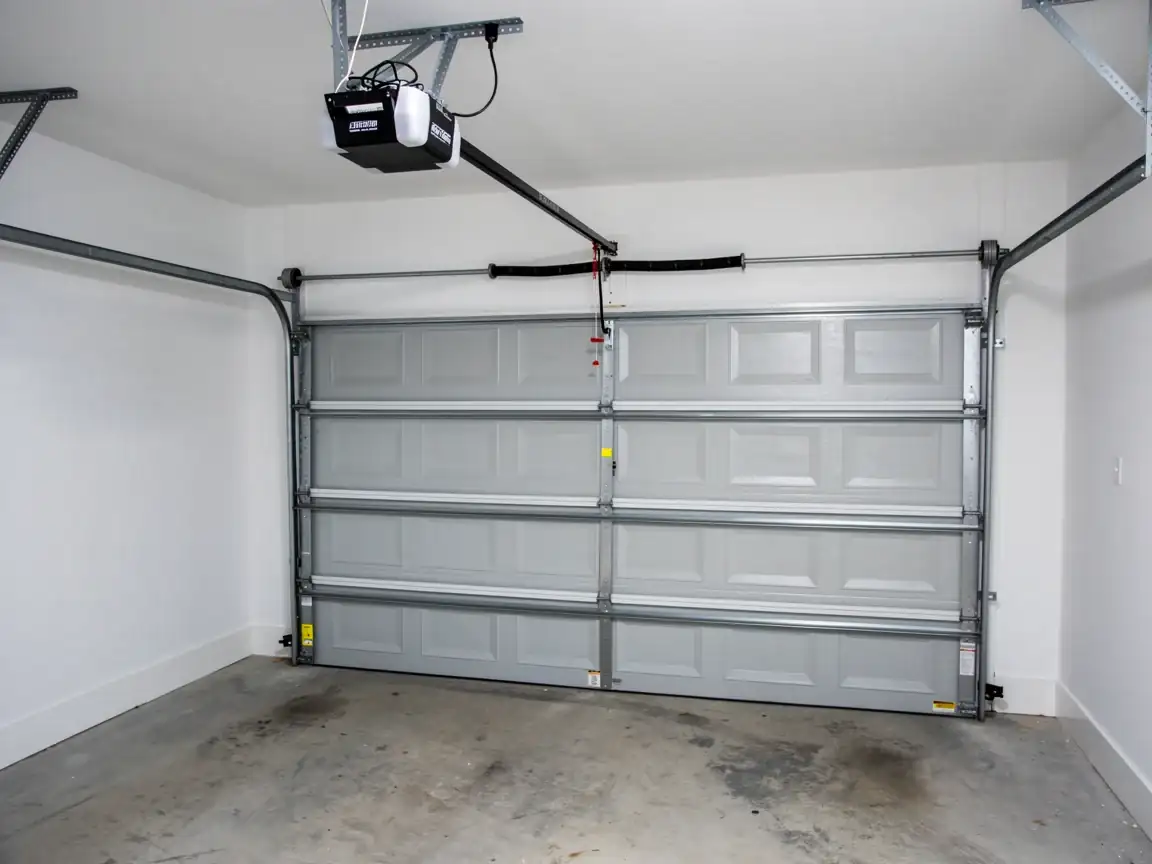
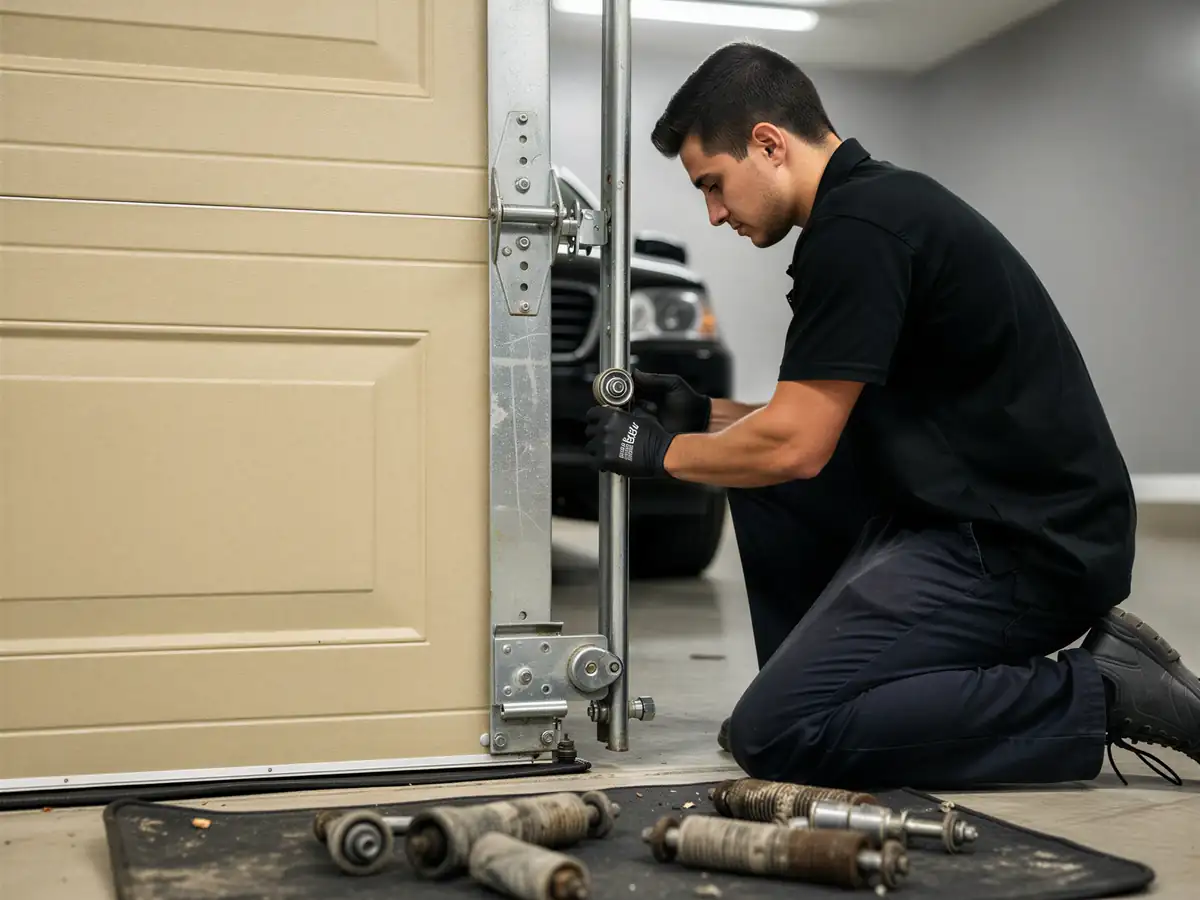
A car bumper or a thrown rock dents a single section without touching the rest of the door. Rust works in from the bottom panel up, usually starting where splash and road salt sit against the steel edge over a winter. Cracking shows up along panel seams on older doors where the steel has thinned from decades of expansion and contraction. And warping happens when a panel takes an uneven load - a kid's bike leaned against it, a shelf bracket mounted straight into the skin - and the section bows instead of sitting flat in the track.
Most of what we see across this service area's housing
Built mostly between 1938 and 2003 with a median around 1976, is one of these four. A dent is usually cosmetic and the door still runs fine. A crack or a rust-through section is structural - the panel isn't holding its shape anymore, which puts uneven stress on the rollers and hinges next to it. Telling those two apart from the driveway isn't always obvious, which is the real reason to get a second set of eyes on it before you order a part.
The Symptom
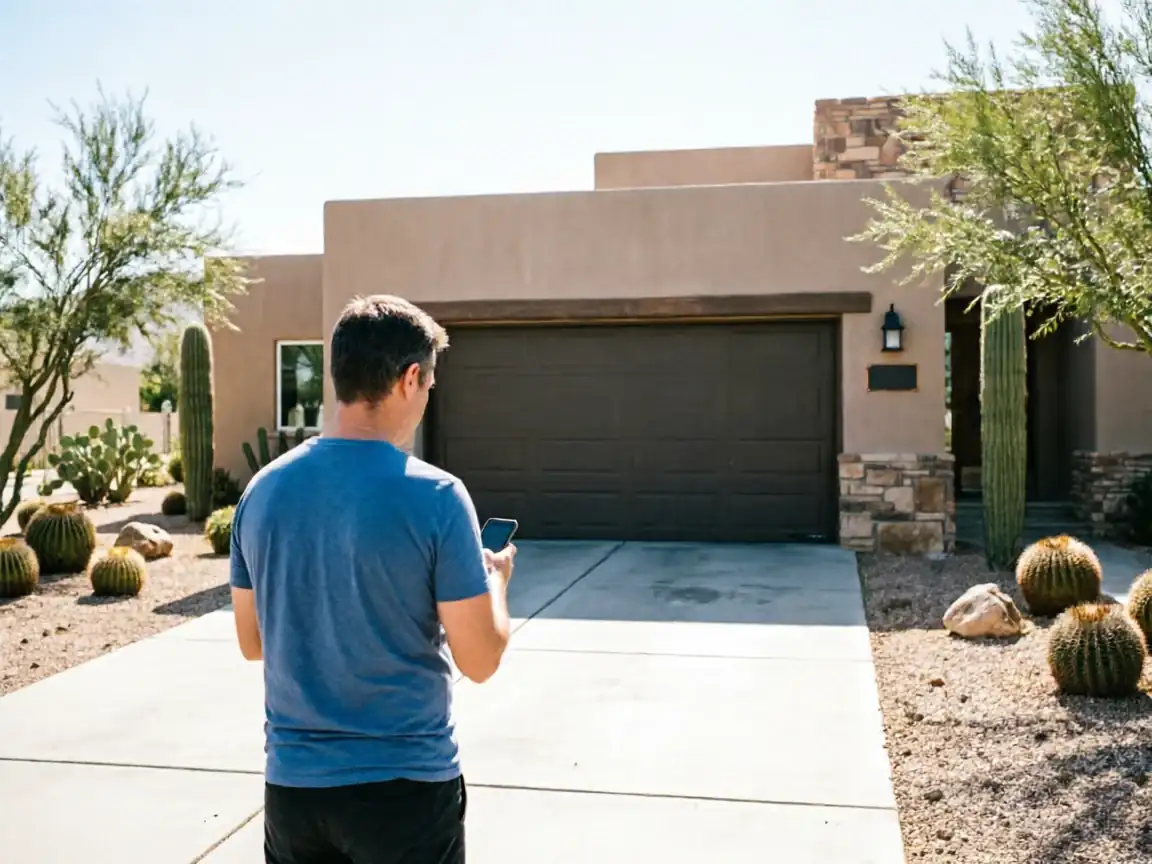
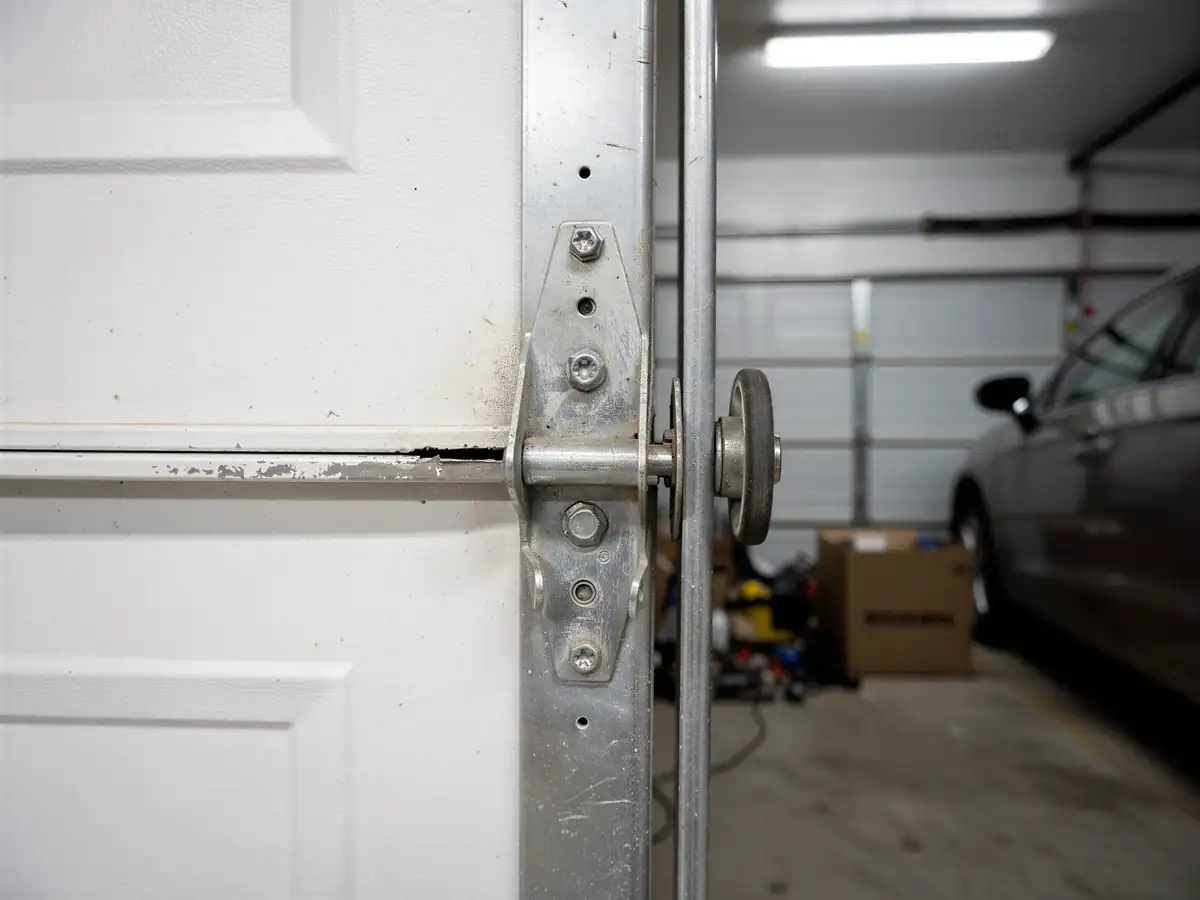
The most common call starts the same way: one section of the door looks different from the rest. Maybe there's a visible dent that catches the porch light at a certain angle. Maybe there's a hairline gap at a seam that wasn't there last year, letting a thin line of daylight through when the door's closed. Sometimes it's rust streaking down from a hinge bolt, or a section that no longer sits flush, so the door looks slightly stepped when you look at it from the side.
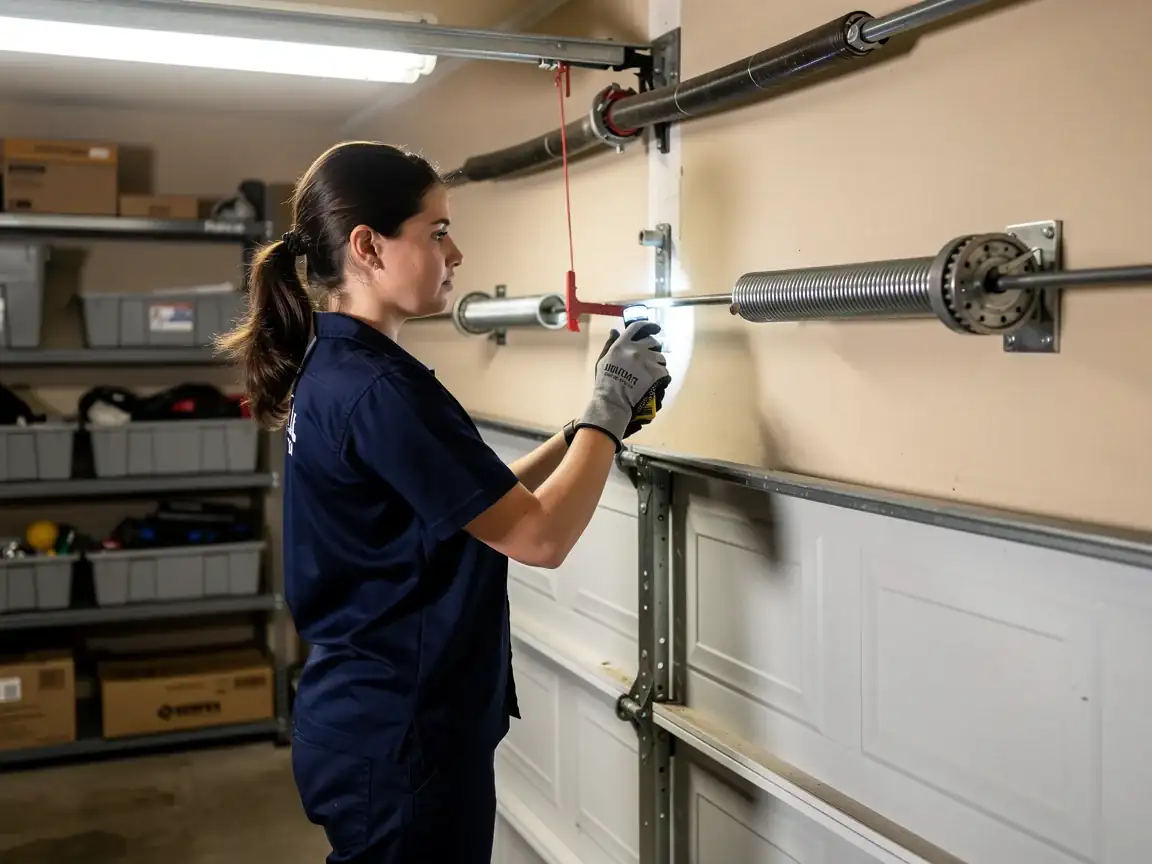
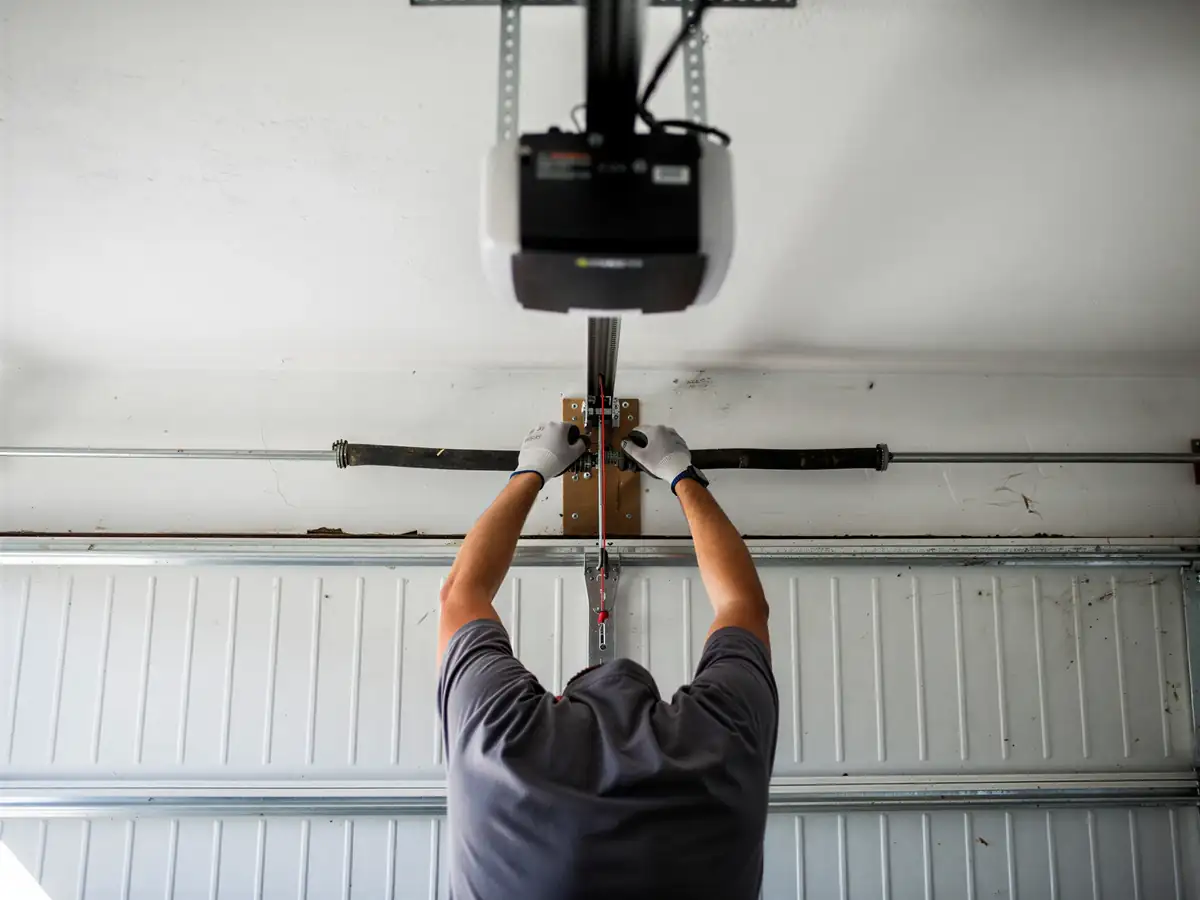
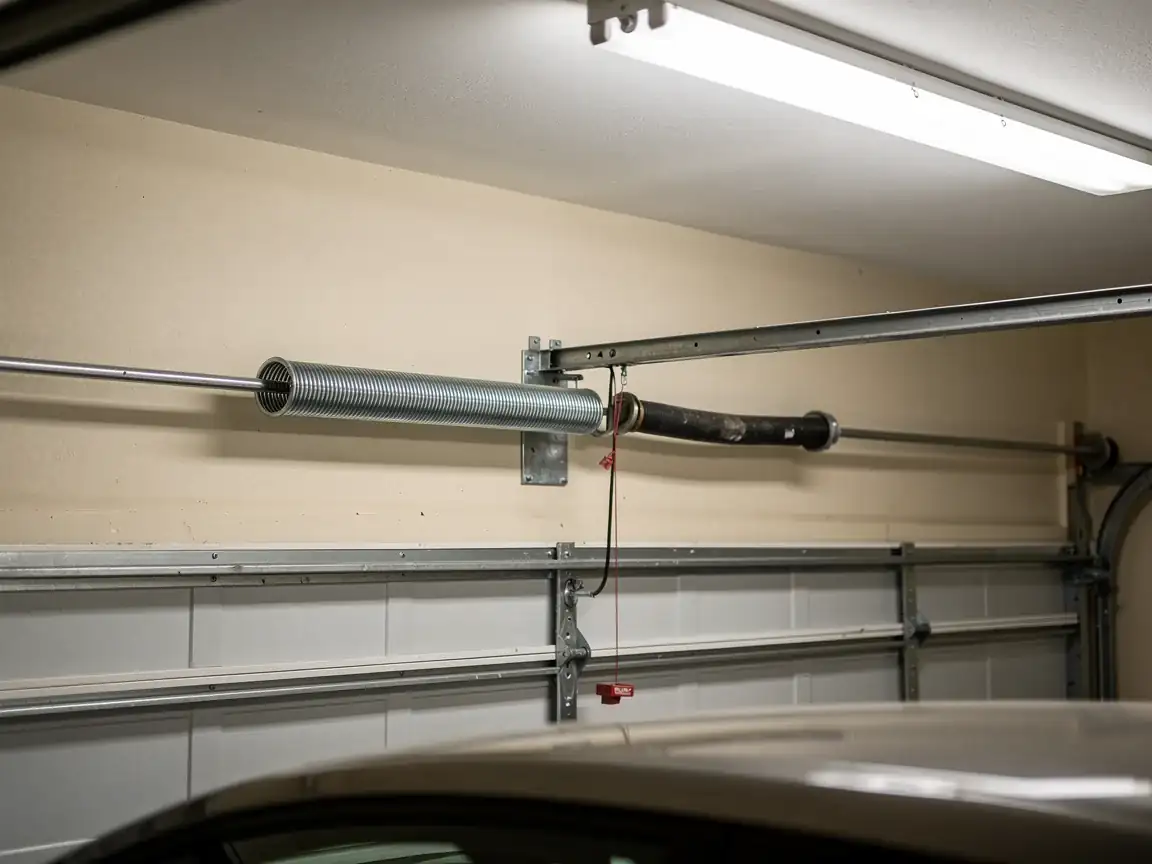
A second, quieter symptom is noise. A warped or cracked panel flexes a little every time the door cycles, and that flex shows up as a new rattle or a scrape against the weatherstrip that wasn't there before. If the opener is straining harder than it used to, or the door hesitates partway up, that's usually the panel pulling the track out of alignment rather than the opener itself failing. Catching it at this stage, before the track bends, is the difference between a panel swap and a bigger repair bill.
Doing It Yourself
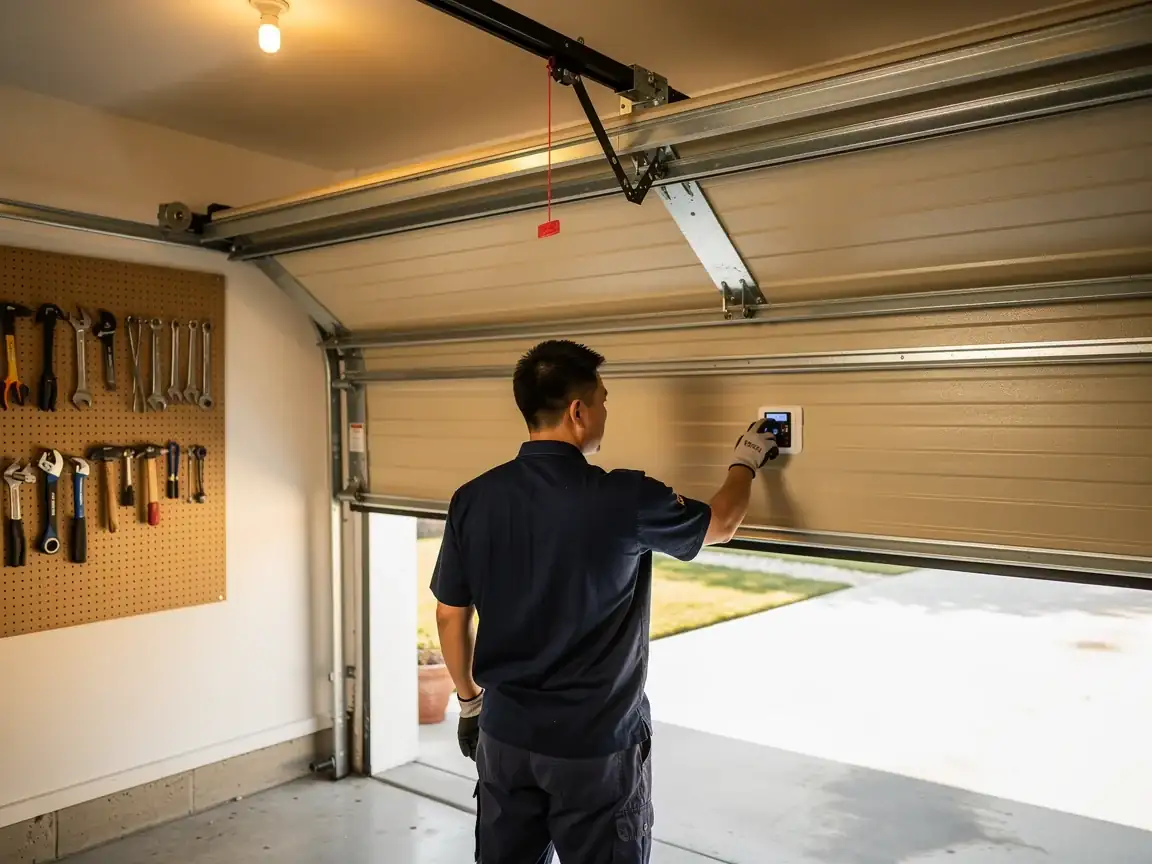
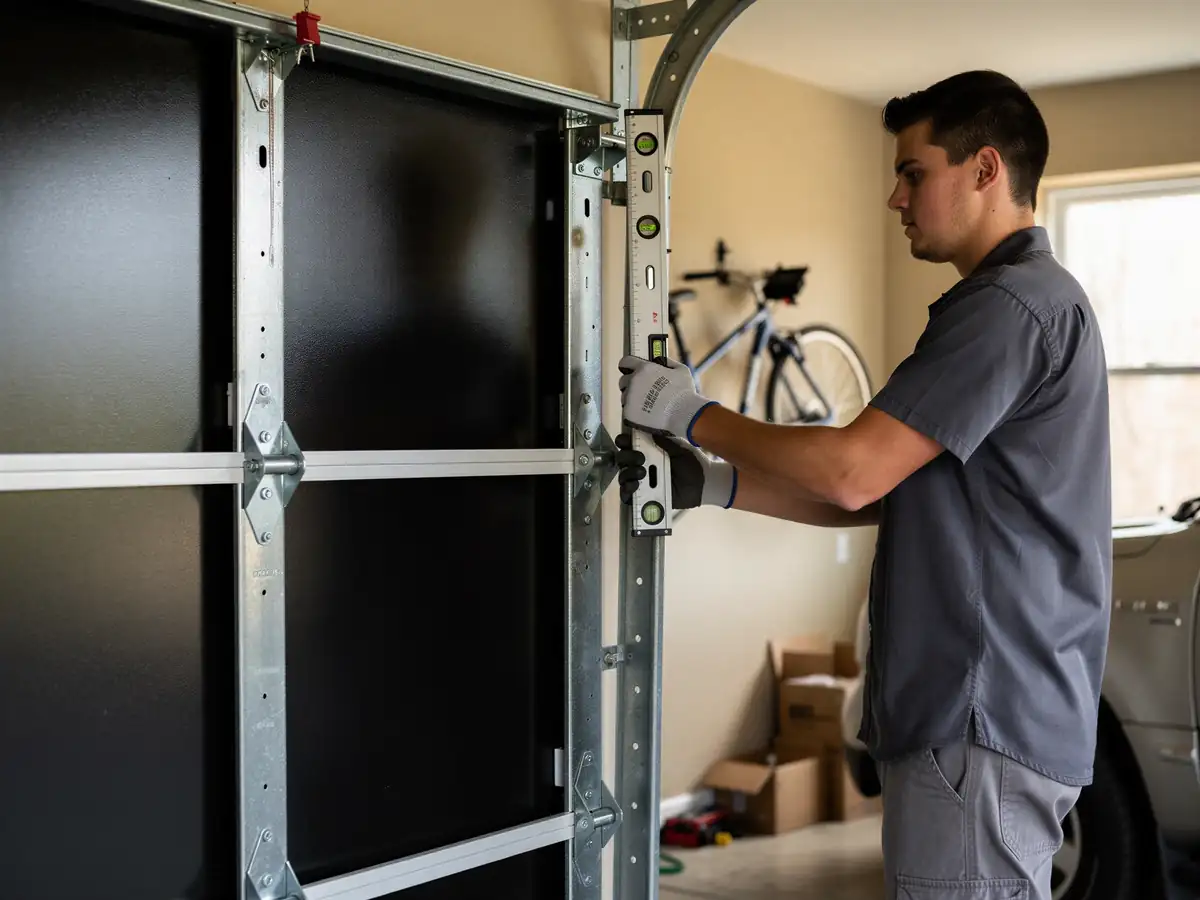
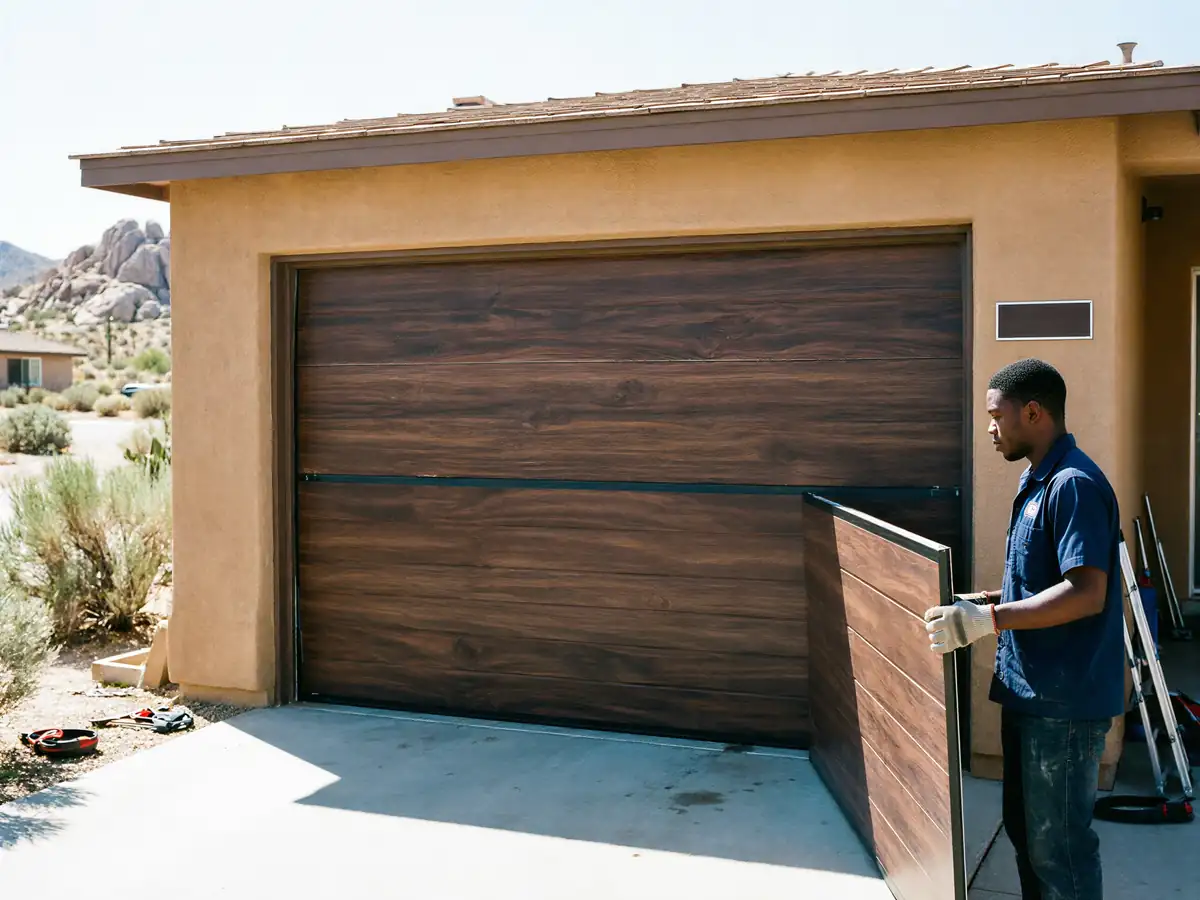
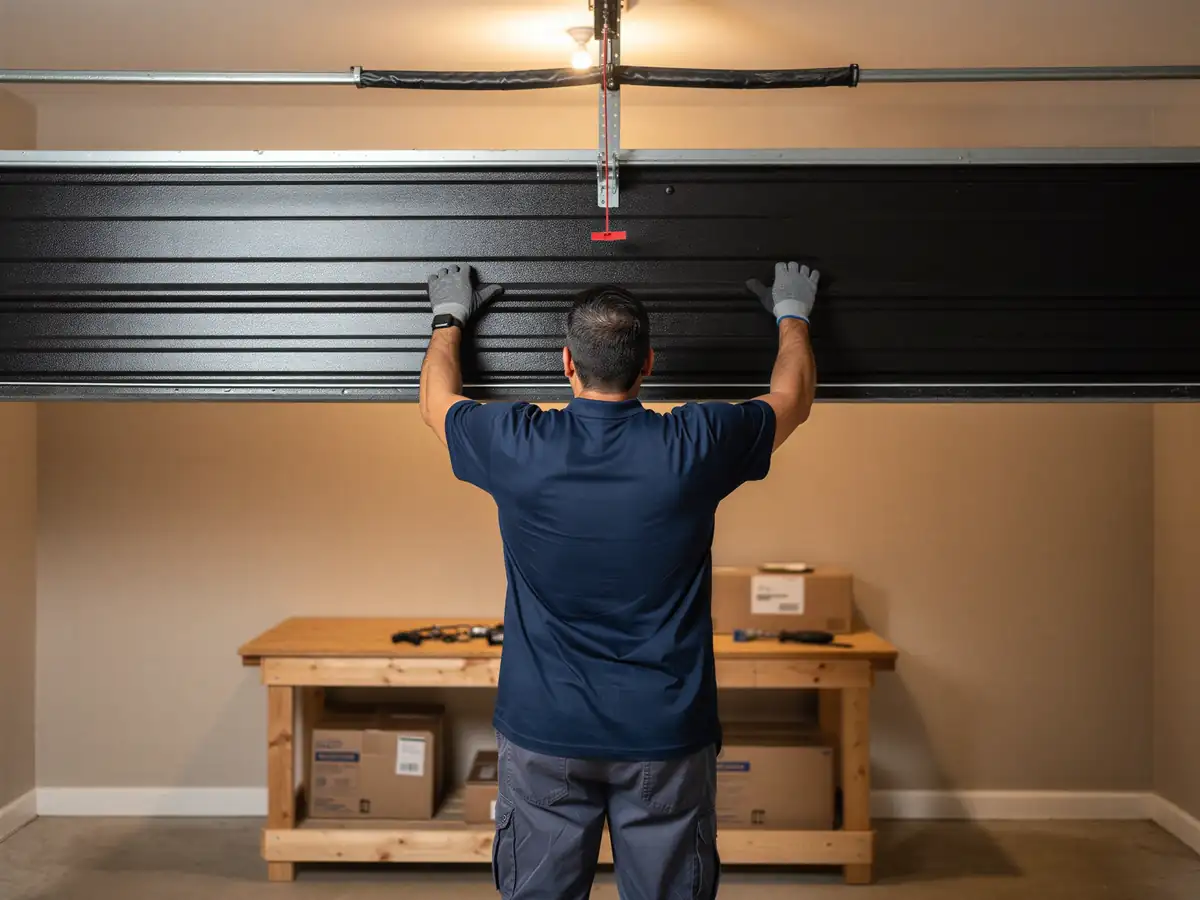
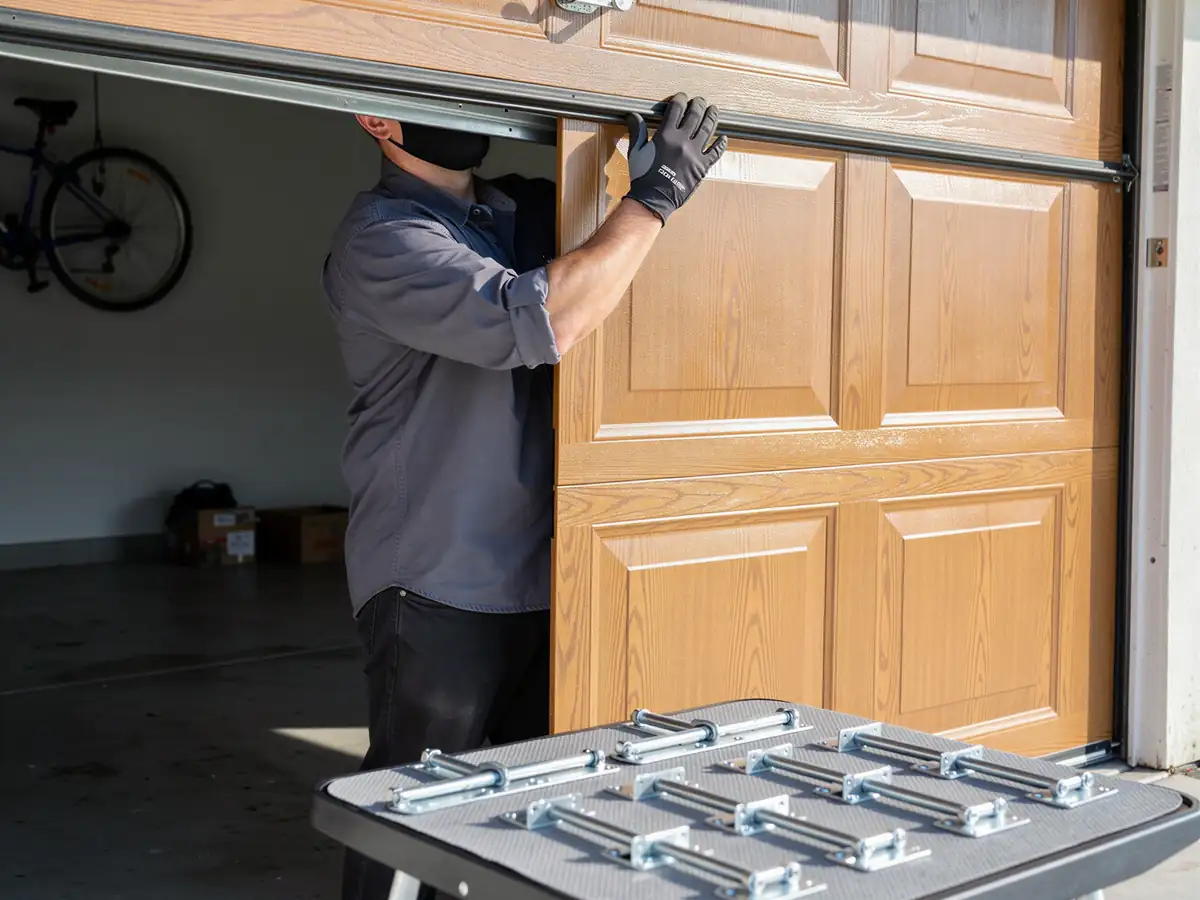
Ordering a single replacement panel and swapping it yourself is possible on some doors, and not possible on others, and the deciding factor is almost always age. If your door was installed in the last ten or fifteen years and the manufacturer still makes that model, a matching panel section is a real option and a reasonable weekend project for someone comfortable with a drill and a level.
Where it gets hard is the older stock that makes up a lot of this area's housing - doors original to homes built well before 2000. Panel styles and colors from that era are frequently discontinued, and a mismatched panel is worse cosmetically than the dent you started with: different ribbing, different paint sheen, a seam that doesn't line up with the others. We'll say plainly that we don't try to force a non-matching panel onto an old door just to make a sale - past a certain point, replacing the full door section by section, or the whole door, costs about the same as hunting down a part that may not exist, and looks a lot better when it's done. That's a judgment call worth making before you buy anything, not after.
Why It Happens Here
This service area sits in a climate band rated severe cold
And that's the biggest reason panel damage shows up as often as it does. Steel panels contract in overnight temperatures well below freezing and expand again in afternoon sun, and that daily cycle works on seams and fasteners in a way flatter, milder climates don't see. Add snow load pressing against a closed door, or ice forming at the bottom panel and pulling against the weatherstrip as it melts and refreezes, and the lowest section of the door takes the brunt of it year after year.
The housing stock compounds it
With homes built between 1938 and 2003 and a median year around 1976, a large share of the doors out there are the same builder-grade steel panel systems installed when those neighborhoods went up - thinner gauge steel than what's sold today, with decades of freeze-thaw cycling behind them. Across the roughly 16,650 owner-occupied houses in the broader service area, a lot of those original doors are still in service, which is why bottom-panel rust and seam cracking are two of the most common calls we get, rather than something unusual.
- 16,650 owner-occupied