What Can Go Wrong
A door comes off track for a handful of reasons, and they're not all the same repair
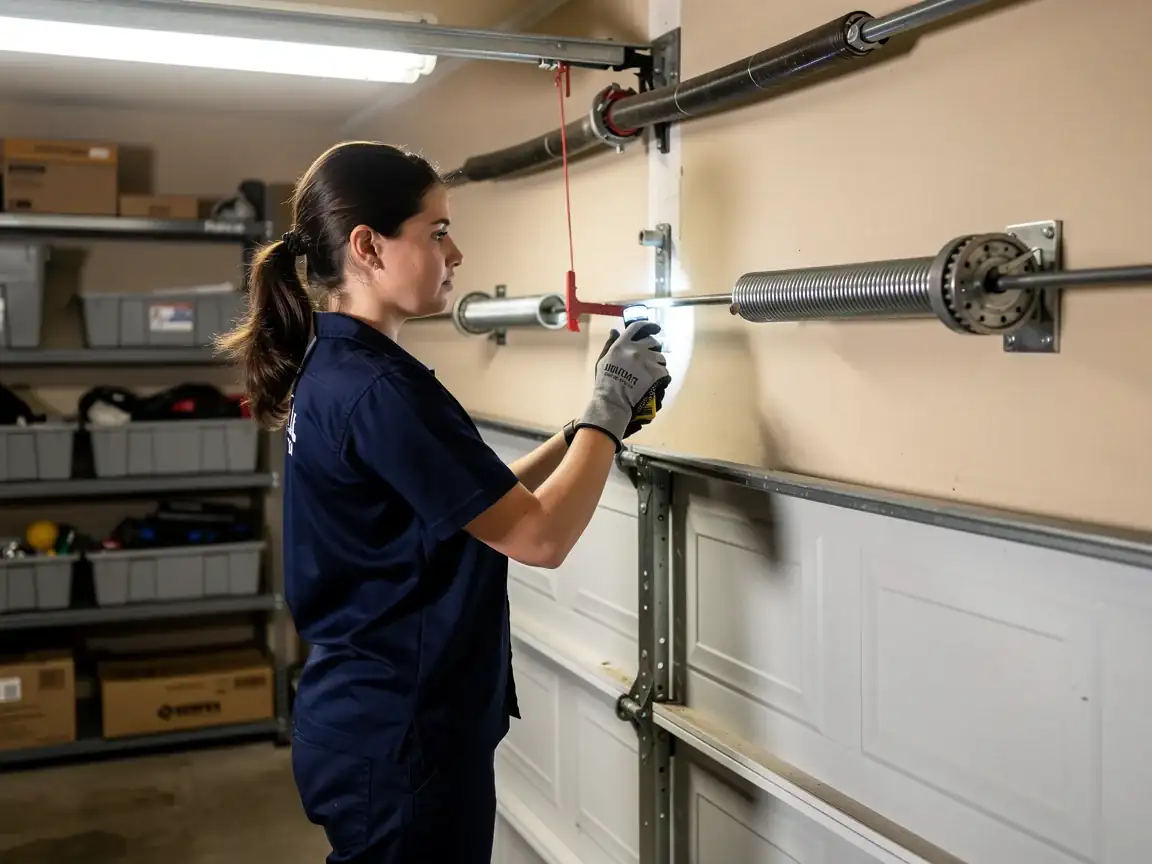
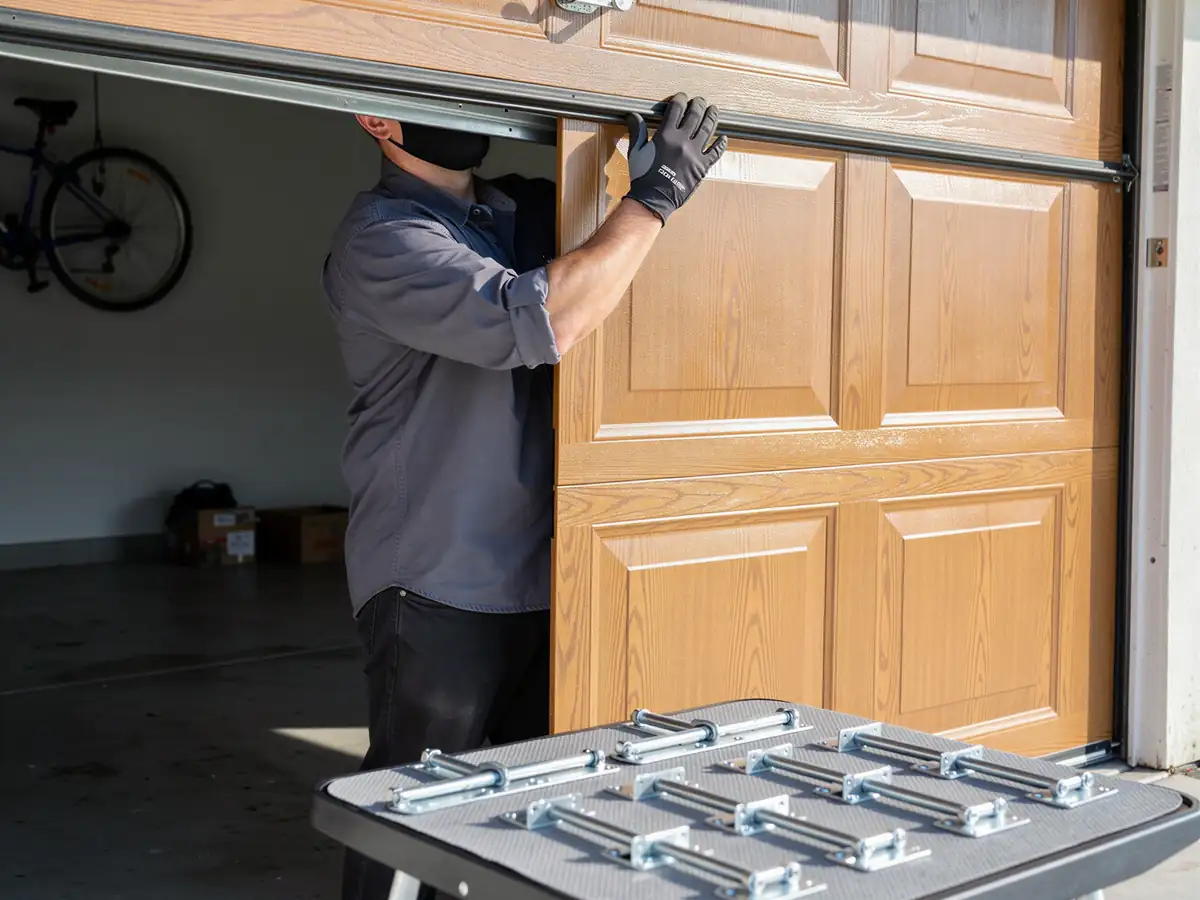
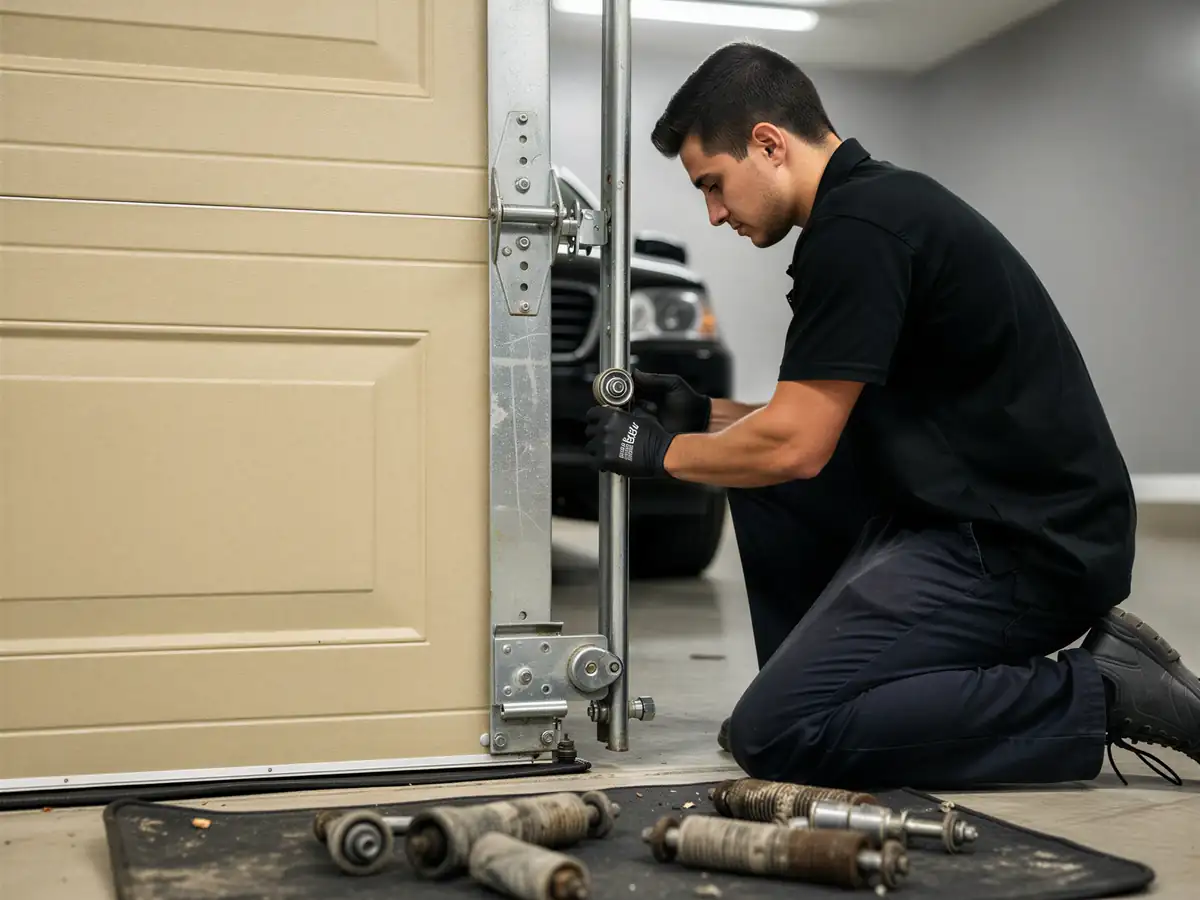
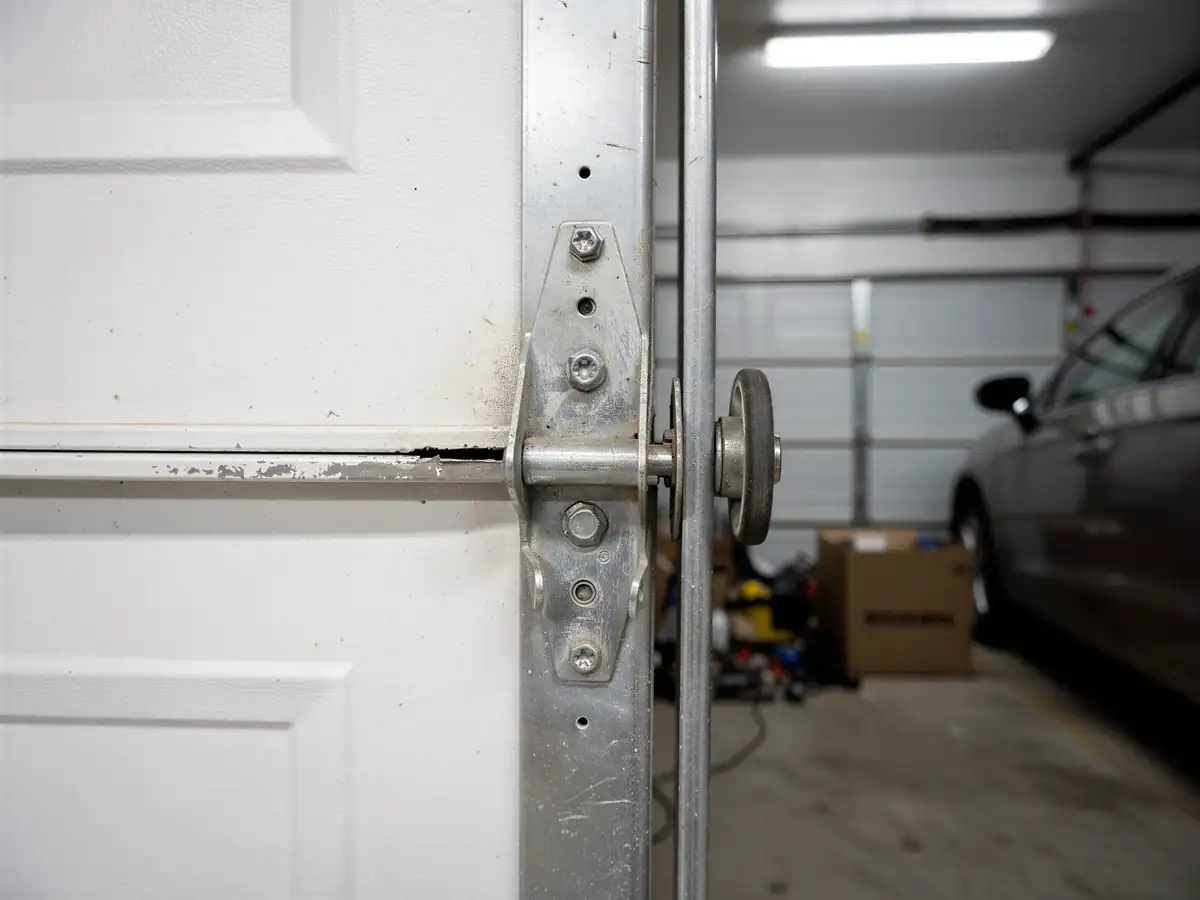
A roller can snap or wear down and jump the rail. A track bracket can work loose from the framing and let the whole rail sag out of alignment. A bent track from a bumped car or a shifted panel will throw the rollers sideways even if nothing looks broken at first glance. On older torsion setups, a cable that's frayed or jumped off its drum can pull one side of the door down while the other stays up, twisting the door against the tracks until it binds or derails entirely.
We also see it on doors where the opener has been fighting a bad spring for months
The opener forces the door through resistance it shouldn't have to overcome, and something eventually gives, usually at the roller or the track bracket closest to the spring side. By the time the door visibly leans or hangs crooked, more than one part is usually involved, which is why a quick look at the track alone rarely tells the whole story.
The Symptom
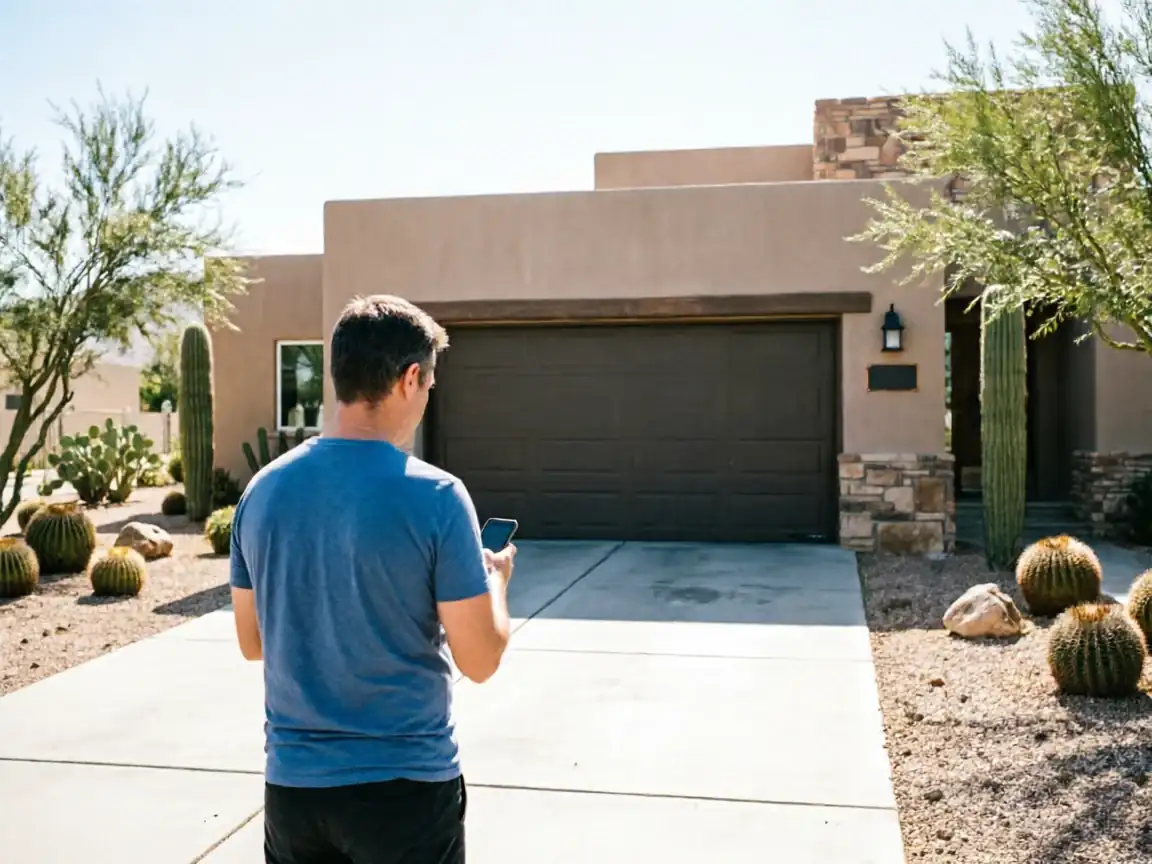
Most owners call it in the same way: the door looks crooked in the opening, one corner sits lower than the other, or it stops partway and won't go up or down without grinding, scraping, or a loud bang from one side. Sometimes a roller is visibly sitting outside the track rather than inside it. Sometimes the door looks fine sitting shut but jumps the track the moment the opener tries to lift it.
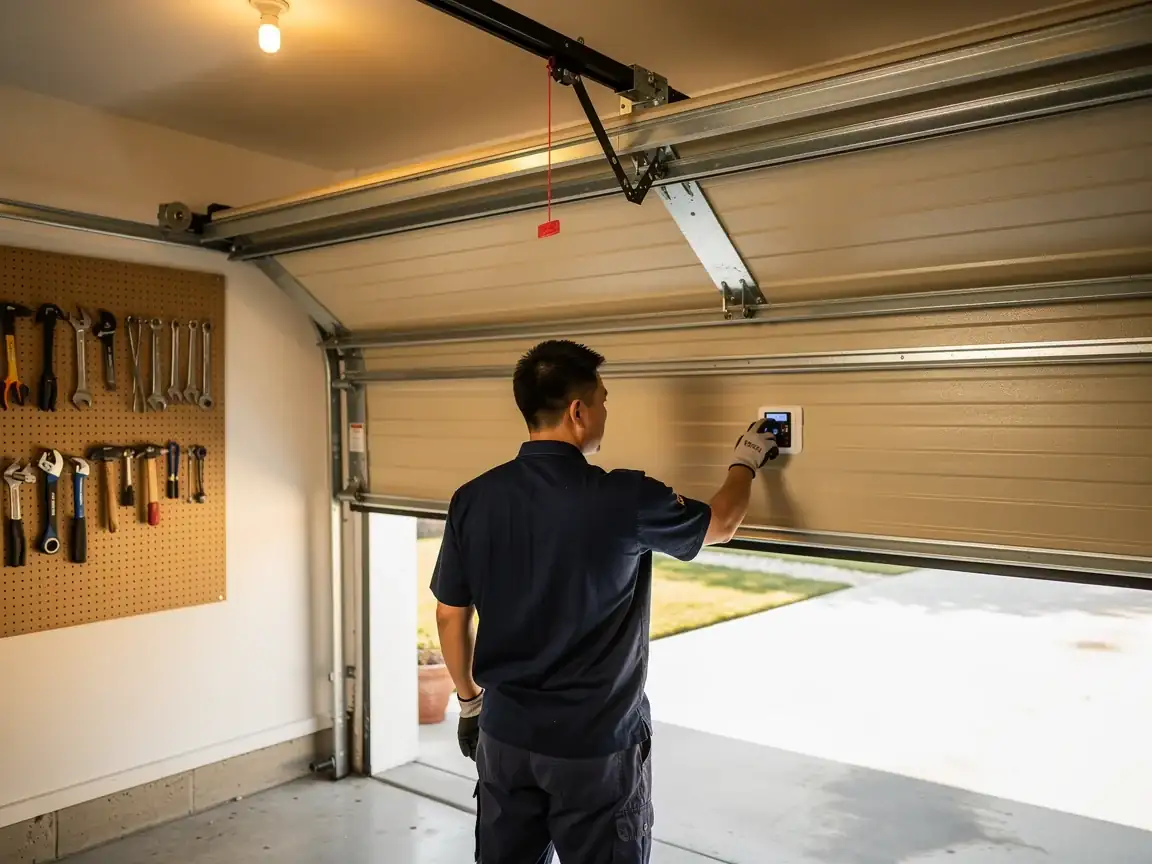
The opener itself is a useful clue. If it strains, reverses, or trips its safety sensor repeatedly before you ever see the door move, that's a sign something downstream, spring, cable, or track, is already fighting the lift. A door that was opening fine yesterday and is off track today almost always has a specific point of failure, not a general one, which is why we ask what you saw and heard before we ever touch the panel.
Doing It Yourself
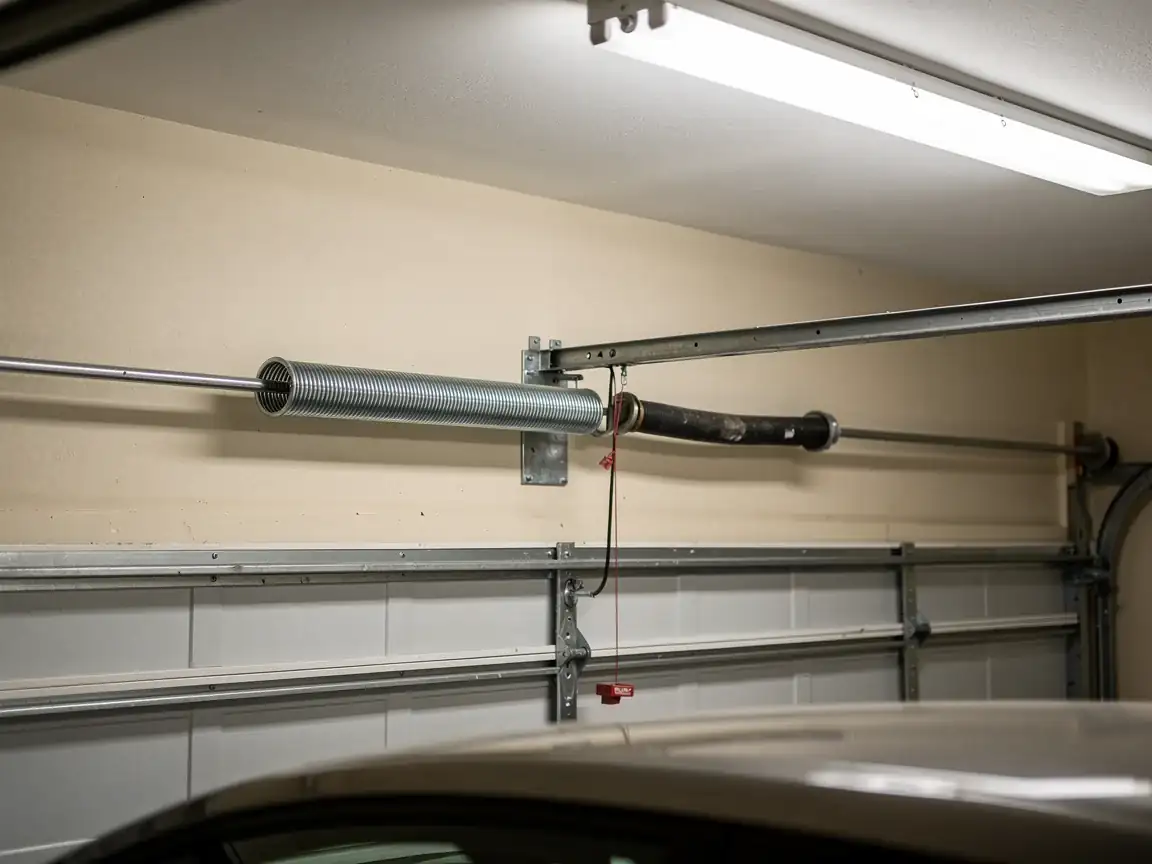
We'll say this plainly: a door off track with the springs still under tension is not a safe DIY repair. Torsion springs store enough force to cause real injury if a bracket lets go while you're working near it, and a door that's already crooked in the frame can drop without warning once you start loosening anything. If the door is simply resting unevenly but the opener is disconnected and the door is manually secured, you can often tell whether it's a roller issue versus a bent track by looking, but we don't recommend trying to force the door back onto the rail yourself.
One honest limitation: if the track itself is bent rather than just knocked loose, bending it back rarely holds for long. Past a certain point we're replacing the section, not straightening it, because a re-bent track tends to fail again within a season, especially once cold weather stiffens the metal and changes how it flexes.
Why It Happens Here
Housing across the service area mostly went up between 1938 and 2003
With the bulk of it dating to the 1960s and 70s across the fourteen named areas we work in. Garage doors and their hardware on houses from that era were built to a different standard than what ships today, and original track brackets anchored into older framing lumber loosen over decades in a way newer construction doesn't. That's a mechanical issue before weather ever enters the picture.
Then the weather does enter the picture
This area sits in a cold, severe climate band, and that matters for a door that's already marginal. Cold temperatures stiffen steel track and torsion springs, make grease inside rollers thicken and resist turning, and make any existing misalignment worse the first time a winter morning asks the opener to work harder than it has in months. A track bracket that was barely holding on in October is a common point of failure by January. We see this pattern across the roughly 16,650 owner-occupied houses in the area, and it tracks closely with the age of the housing stock, not with any one neighborhood.
- 16,650 owner-occupied