What Changes With the Season
Carson City sits in a cold-severe climate band
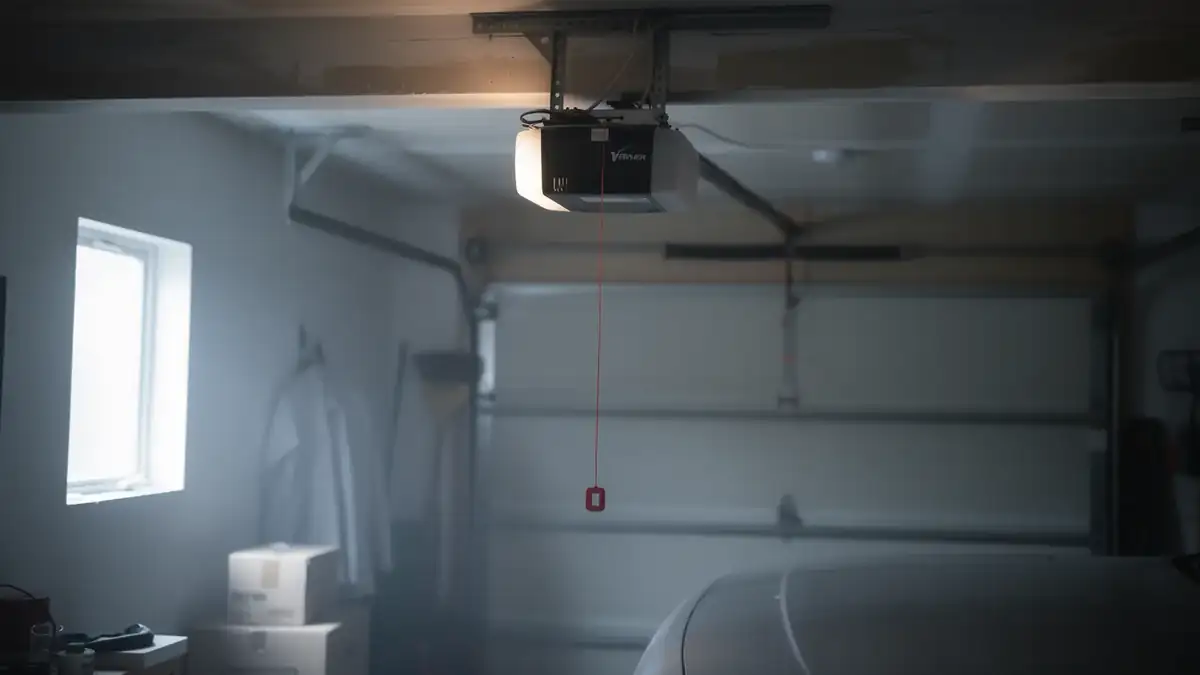
And that matters more for your opener than for almost any other part of the door. Cold snaps here bring the kind of grid strain that causes short outages - not hurricane-level stuff, just enough to cut power mid-cycle on a door that's halfway up or halfway down. If your opener doesn't have battery backup, that door sits wherever it stopped until the power comes back or you pull the manual release.
The other seasonal issue is lubricant
Cold makes grease on rollers and track stiffen up, which means the opener's motor works harder to pull a heavier load every cycle. Over a winter, that extra strain shows up as a tired capacitor or a gear set that wears faster than it should. None of this is dramatic. It's slow wear that homeowners notice two or three winters in, usually as a door that starts hesitating before it moves.
If you're in one of the areas further out
Toward Virginia City or Dollar Point - the same cold applies, sometimes with a longer wait if a line down is involved. That's not something a garage door tech controls, but it's worth planning around if you depend on the opener for a vehicle you need every day.
The Situation
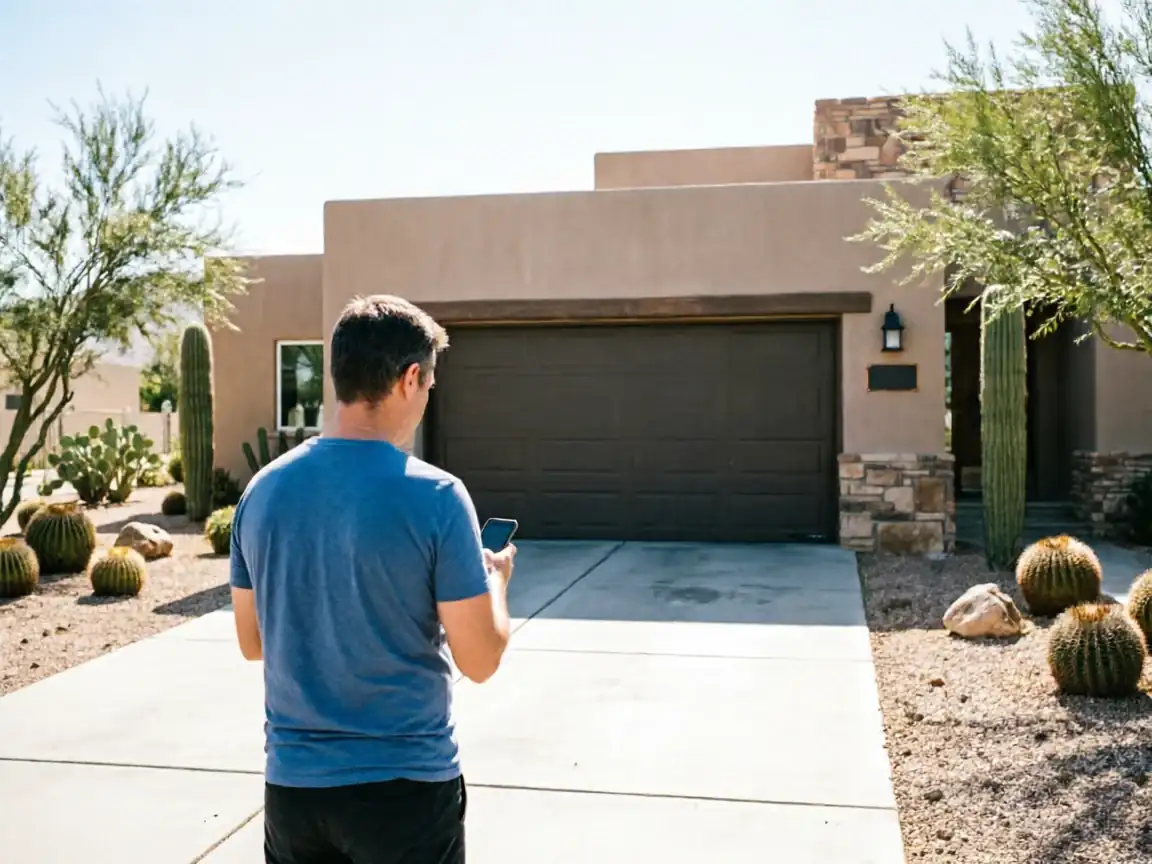
Housing in the service area runs from 1938 to 2003, with the median landing around 1976. A lot of that mid-70s stock came with openers that have been replaced once, sometimes twice, since the house was built - but the wiring and the outlet behind the unit often haven't been touched. That matters during a power cut, because an opener that loses power and comes back on can sometimes trip a breaker that wasn't rated for the draw to begin with, especially in a garage that was wired decades before anyone added a second freezer or a workbench full of tools out there.
Across the roughly 21,860 households we're talking about, with 16,650 of those owner-occupied houses, there's a wide range of setups: some have had a full opener swap in the last five years with battery backup built in, and a good number are still running units from well before that was standard. The difference shows up exactly when you don't want it to - during a cold-weather outage, at night, with a car you need to move.
Median household income here sits at $96,019, which does put a battery-backup unit or a surge-protected outlet within reach for most homeowners. It's a reasonable upgrade to plan for, not a luxury.
What Local Conditions Do
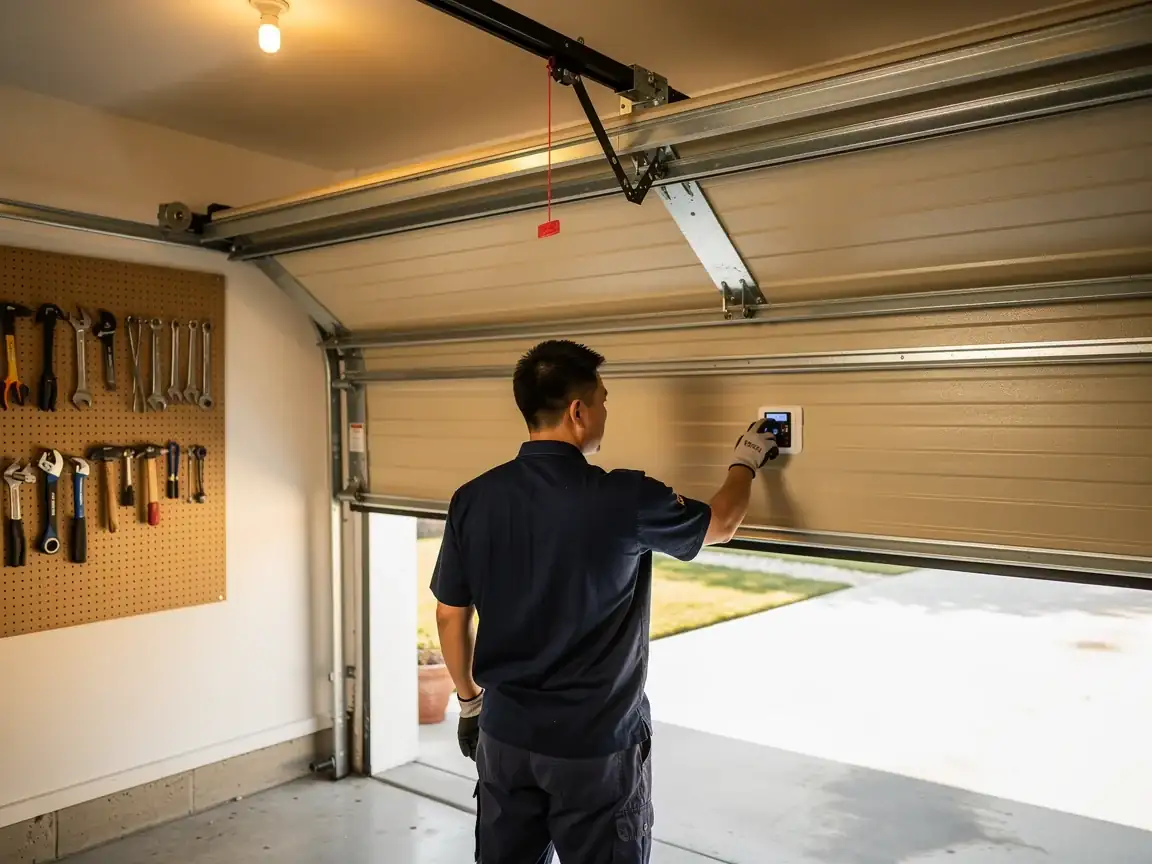
Cold and power cuts together do a specific thing to openers: they expose whichever safety feature was never installed. A door that's stuck half-open because the power dropped mid-cycle isn't a broken opener - it's an opener doing exactly what it's built to do without battery backup. The fix isn't always a repair call. Sometimes it's a battery backup unit added to what you already have.
On the older end of the 1938-2003 range, we also see garage circuits that were never a dedicated line. When the power comes back after an outage, a cold motor drawing extra current can nuisance-trip a shared breaker. That's wiring, not the opener itself, and it's outside what a garage door call typically resolves - an electrician needs to look at the circuit.
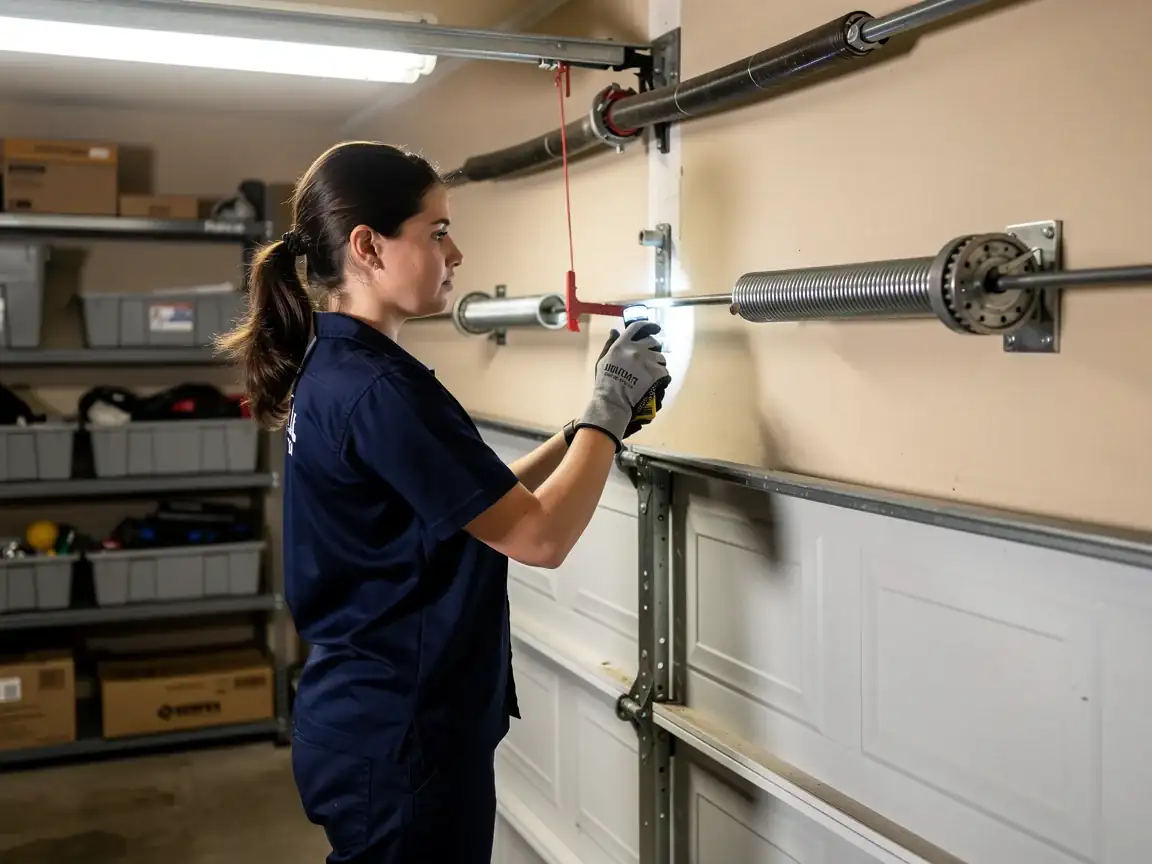
The cold-severe climate band also means grease thickens on gears inside the opener housing itself, not just on the track. An opener that sounds strained on a 20-degree morning usually needs a service and relube, not a replacement. But if it's already old enough that parts are hard to source, replacement ends up being the honest answer, not the upsell.
Where People Go Wrong
The most common mistake: assuming a stuck door after an outage means the opener is dead
Nine times out of ten it's just stopped mid-cycle, and pulling the manual release cord gets you moving again by hand until power's stable. Panic-calling for an emergency repair on a door that just needs a manual pull wastes money.
The second mistake is skipping the battery backup conversation because the opener still runs fine most days
It runs fine until the one cold night a line goes down, and then it's whatever position it stopped in - which could mean a car trapped inside or a garage wide open to the cold. Given the climate band here, that's not a rare edge case, it's a predictable one.
We'll say plainly what we don't do: we don't rewire garage circuits
If the issue traces back to a shared breaker or undersized wiring from the house's original build year, that's an electrician's job, and we'll tell you that straight instead of working around it with a patch that won't hold.